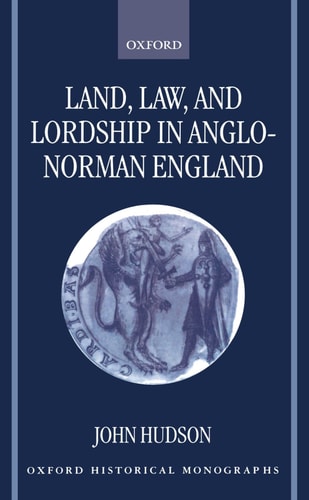
Land, Law, and Lordship in Anglo-Norman England
0
0
As an Amazon Associate and affiliate partner, Menrva Books earns from qualifying purchases. Learn more
Author Description
This is an important new interpretation of the development of land law in England during the century after the Norman Conquest. Norman society was based upon land and lordship, and the relative power of lord and vassal was crucial to the control of land. John Hudson exploits a wealth of surviving charter and chronicle evidence and examines the uses to which lords and vassals put their lands, the relationships between them, and the constraints upon them, in an approach which integrates social, political, administrative, and intellectual history.
Menrva's Summary
THE THESIS
This work investigates the evolution of land law in England during the century following the Norman Conquest, specifically examining how the dynamics of lordship and vassalage shaped legal structures. John Hudson, a scholar of medieval legal history, utilizes a comprehensive analysis of primary source materials, including charters and chronicles, to reconstruct the administrative and social landscape of the era. He argues that the control of land was not merely a legal abstraction but a reflection of the shifting power balance between lords and their subordinates, integrating political and intellectual history to explain these developments.
THE SCOPE MAP
What You Will Find
- Analysis of land tenure and lordship dynamics in post-Conquest England
- Examination of surviving medieval charters and chronicle evidence
- Integration of social, political, and administrative historical methodologies
- Study of the constraints placed upon lords and vassals regarding land usage
THE AUTHORITY PERSPECTIVE
Historians and legal scholars recognize this text as a foundational study for understanding the complexities of Anglo-Norman land law. Readers frequently note the academic density of the prose, which provides a rigorous examination of the period for advanced students and researchers.
Page Count:
336
Publication Date:
1997-07-10
Publisher:
Clarendon Press
ISBN-10:
0198206887
ISBN-13:
9780198206880
History
Political History
Legal History
British History
Great Britain