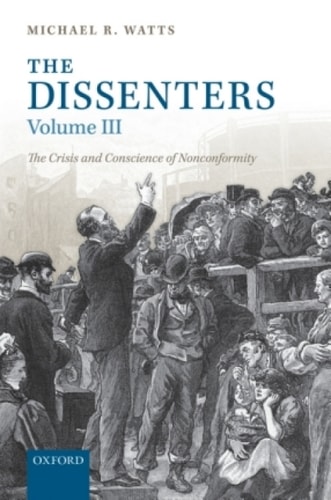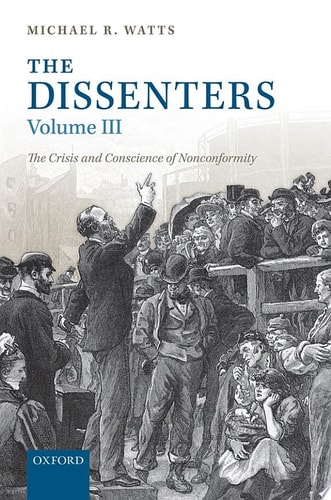
The Dissenters: Volume III: The Crisis and Conscience of Nonconformity
0
0
As an Amazon Associate and affiliate partner, Menrva Books earns from qualifying purchases. Learn more
Author Description
This third and final volume of Michael Watts's study of dissent examines the turbulent times of Victorian Nonconformity, a period of faith and of doubt. Watts assesses the impacts of the major Dissenting preachers and provides insights into the various movements, such as romanticism and the higher, often German, biblical criticism. He shows that the preaching of hell and eternal damnation was more effective in recruiting to the chapels than the gentler interpretations. A major feature of the volume is a thorough analysis of surviving records of attendance at Nonconformist services. He provides fascinating accounts of Spurgeon and the other key figures of Nonconformity, including of the Salvation Army.Dr Watts also provides a fresh discussion of the contribution which Nonconformity made to the politics of mid- to late-Victorian Britain. He examines such issues of reform as Forster's Education Act of 1871, temperance, and Balfour's Education Act of 1902, and considers Nonconformist interventions in such controversies as the Bulgarian Agitation, Home Rule for Ireland, the Armenian massacres of the mid 1890s, and the Boer War. The volume concludes with the Liberal landslide in the 1906 general election, which saw probably more Nonconformists elected than any time since the era of Oliver Cromwell.
Menrva's Summary
THE THESIS
This volume investigates the complex intersection of Victorian Nonconformity, religious faith, and political influence in late 19th-century Britain. Michael R. Watts, a scholar of religious history, utilizes extensive archival research and attendance records to evaluate how Dissenting movements navigated the challenges of biblical criticism and social reform. The work argues that the theological and political engagement of Nonconformists significantly shaped the British political landscape leading up to the 1906 general election.
THE SCOPE MAP
What You Will Find
- Analysis of Victorian-era religious movements including the impact of romanticism and German biblical criticism.
- Quantitative assessment of chapel attendance records and recruitment strategies involving themes of eternal damnation.
- Examination of Nonconformist political involvement in major legislative events like the 1871 and 1902 Education Acts.
- Historical accounts of key figures such as Spurgeon and the development of the Salvation Army.
THE AUTHORITY PERSPECTIVE
Scholars recognize this work as a definitive conclusion to a comprehensive study of the Dissenting tradition in Britain. Readers frequently note the academic density of the prose and the meticulous use of primary source data to support the author's historical conclusions.
Page Count:
600
Publication Date:
2015-05-19
Publisher:
Oxford University Press
ISBN-10:
0198229690
ISBN-13:
9780198229698
Religion
History
Great Britain
Nonconformity
Victorian Era
Christianity
British History