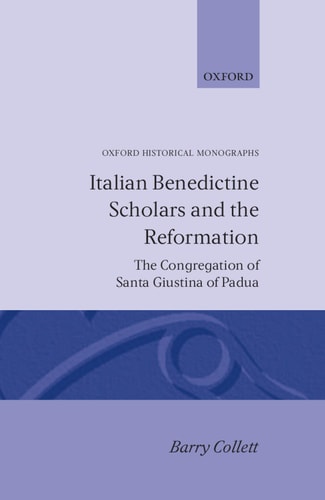
Italian Benedictine Scholars and the Reformation: The Congregation of Santa Giustina of Padua
0
0
As an Amazon Associate and affiliate partner, Menrva Books earns from qualifying purchases. Learn more
Author Description
European history from 1480 to 1570 was a period of turbulent change, political upheaval, profound moral questioning, and urgent philosophical speculation. This book explores the intriguing role of the almost-forgotten Congregation of Benedictine monks of Italy and southern France in the events of these tumultuous years. From archival and published records, the picture emerges of a closely-knit order of humanist scholars whose religious and philosophical studies later put them in a unique position to understand the Reformers. The book also casts light on the monks' fascinating reaction to the Reformation, as they poured out a stream of academic books, tracts, sermons, and poems in their attempt to heal the deepening rift between Rome and the Reformers. Critized and misunderstood by all sides, the Congregation gradually fell into decline until it was finally suppressed under the Napoleanic invasions.
Menrva's Summary
THE THESIS
This book investigates the historical influence and theological contributions of the Congregation of Santa Giustina of Padua during the religious and political volatility of the European Reformation. Barry Collett, an expert in Renaissance and Reformation history, utilizes archival records and primary source texts to reconstruct the intellectual environment of this Benedictine order. The work argues that these humanist scholars occupied a distinct middle ground, attempting to bridge the ideological chasm between the Roman Catholic Church and the emerging Protestant Reformers through academic discourse and literature.
THE SCOPE MAP
What You Will Find
- Historical analysis of the Congregation of Santa Giustina of Padua between 1480 and 1570.
- Examination of the intersection between Benedictine monasticism and Renaissance humanism.
- Primary source evidence derived from sermons, tracts, academic books, and poetry produced by the monks.
- Documentation of the order's eventual decline and suppression during the Napoleonic era.
THE AUTHORITY PERSPECTIVE
Scholars recognize this monograph as a specialized contribution to the study of Italian religious history during the sixteenth century. Readers frequently note the academic density of the prose, which provides a detailed look at a neglected group of thinkers within the broader Reformation context.
Page Count:
300
Publication Date:
1986-02-06
Publisher:
Clarendon Press
ISBN-10:
0198229348
ISBN-13:
9780198229346
History
Reformation
Benedictines
Humanism
European History
Church History
Monasticism
Religious History
Community Tags
Similar Books