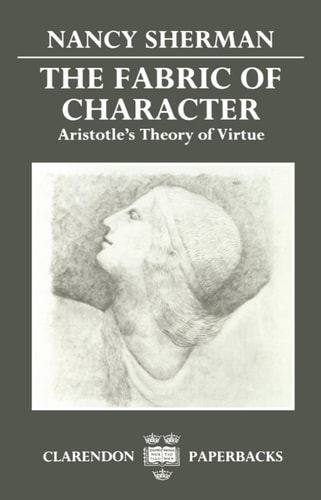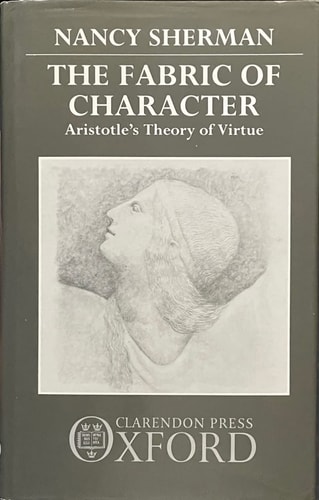
The Fabric of Character: Aristotle's Theory of Virtue
0
0
As an Amazon Associate and affiliate partner, Menrva Books earns from qualifying purchases. Learn more
Author Description
Most traditional accounts of Aristotle's theory of ethical education neglect its cognitive aspects. This book asserts that, in Aristotle's view, excellence of character comprises both the sentiments and practical reason. Sherman focuses particularly on four aspects of practical reason as they relate to character: moral perception, choicemaking, collaboration, and the development of those capacities in moral education. Throughout the book, she is sensitive to contemporary moral debates, and indicates the extent to which Aristotle's account of practical reason provides an alternative to theories of impartial reason.
Menrva's Summary
THE THESIS
This book investigates whether Aristotle's theory of ethical education is fundamentally incomplete without a rigorous integration of cognitive processes and practical reason. Nancy Sherman, a scholar of ancient philosophy, argues that traditional interpretations often overlook the intellectual components of virtue. By examining the interplay between sentiment and reason, she posits that Aristotelian excellence requires a sophisticated synthesis of moral perception and deliberate action. The text serves as a re-evaluation of how ancient ethical frameworks address the development of character in a modern context.
THE SCOPE MAP
What You Will Find
- An analysis of the cognitive dimensions of Aristotelian virtue ethics.
- A detailed examination of moral perception, choicemaking, and collaborative reasoning.
- A comparative study between Aristotelian practical reason and contemporary theories of impartial reason.
- Pedagogical insights into the development of moral capacities within an educational framework.
THE AUTHORITY PERSPECTIVE
Scholars and students of ethics frequently cite this work as a critical intervention in the study of Aristotelian character development. Experts highlight the text for its ability to bridge the gap between ancient philosophical theory and modern debates regarding moral education.
Page Count:
232
Publication Date:
1989-05-18
Publisher:
Oxford University Press
ISBN-10:
0198244517
ISBN-13:
9780198244516
Philosophy
Ethics
Education