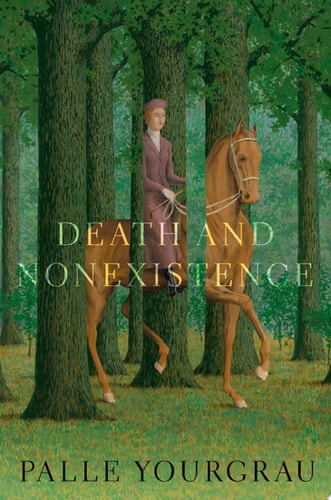
Death and Nonexistence
0
0
As an Amazon Associate and affiliate partner, Menrva Books earns from qualifying purchases. Learn more
Author Description
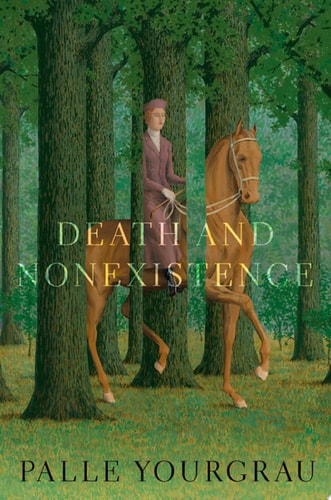
The dead are gone. They count for nothing. Yet, if we count the dead, their number is staggering. And they account for most of what is great about civilization. Compared to the greatness of the dead, the accomplishments of the living are paltry. Which is it then: are the dead still there to be counted or not? And if they are still there, where exactly is "there"? We are confronted with the ancient paradox of nonexistence bequeathed us by Parmenides. The mystery of death is the mystery of nonexistence.A successful attempt to provide a metaphysics of death, then, must resolve the paradox of nonexistence. That is the aim of this study. At the same time, the metaphysics of death, of ceasing to exist, must serve as an account of birth, of coming to exist; the primary thesis of this book is that this demands going beyond existence and nonexistence to include what underlies both, which one can call, following tradition, "being." The dead and the unborn are therefore objects that lack existence but not being. Nonexistent objects - not corpses, or skeletons, or memories, all of which are existent objects - are what are "there" to be counted when we count the dead.
Menrva's Summary
THE THESIS
This book investigates the metaphysical paradox of nonexistence to determine the status of the dead and the unborn. Palle Yourgrau, a philosopher specializing in logic and metaphysics, argues that traditional binary views of existence are insufficient to account for the dead. He proposes a framework that distinguishes between existence and 'being,' suggesting that while the dead lack existence, they retain a form of being that allows them to be objects of inquiry.
THE SCOPE MAP
What You Will Find
- An analysis of the Parmenidean paradox regarding nonexistence.
- A philosophical distinction between physical remains and the ontological status of the deceased.
- A proposed metaphysical model that integrates both birth and death into a unified theory of being.
Scope Limits
- The text does not provide empirical or scientific data regarding biological death.
- It avoids theological or religious interpretations of the afterlife, focusing strictly on analytic metaphysics.
THE AUTHORITY PERSPECTIVE
Scholars and readers often note the high level of technical rigor required to engage with Yourgrau's arguments. Experts frequently highlight this work as a challenging contribution to contemporary ontological debates regarding non-existent objects.
Page Count:
226
Publication Date:
2019-01-01
Publisher:
Oxford University Press
ISBN-10:
0190053968
ISBN-13:
9780190053963
Philosophy
Gerontology
Metaphysics
Mathematics - General
Philosophy history
Death Studies
Human Geography
Social Philosophy
Earth Sciences
Ontology
Death
Mind & Body