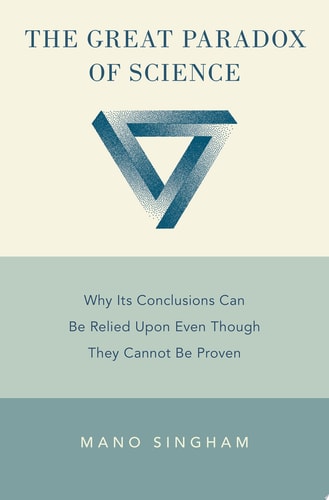
The Great Paradox of Science: Why Its Conclusions Can Be Relied Upon Even Though They Cannot Be Proven
0
0
As an Amazon Associate and affiliate partner, Menrva Books earns from qualifying purchases. Learn more
Author Description
Science has revolutionized our lives and continues to show inexorable progress today. It may seem obvious that this must be because its theories are steadily getting better and approaching the truth about the world. After all, what could science be progressing toward, if not the truth? But scholarship in the history, philosophy, and sociology of science offers little support for such a sanguine view.Those opposed to specific conclusions of the scientific community-nonbelievers in vaccinations, climate change, and evolution, for example-have been able to use a superficial understanding of the nature of science to sow doubt about the scientific consensus in those areas, leaving the general public confused as to whom to trust, with damaging effects for the health of individuals and the planet.The Great Paradox of Science argues that to better counter such anti-science efforts requires us to understand the nature of scientific knowledge at a much deeper level and dispel many myths and misconceptions. It is the use of scientific logic, the characteristics of which are elaborated on in the book, that enables the scientific community to arrive at reliable consensus judgments in which the public can retain a high degree of confidence. This scientific logic is applicable not just in science but can be used in all areas of life. Scientists, policymakers, and members of the general public will not only better understand why science works: They will also acquire the tools they need to make sound, rational decisions in all areas of their lives.
Menrva's Summary
THE THESIS
This book investigates the core paradox of how scientific conclusions can be considered reliable and actionable despite the fact that they cannot be definitively proven in an absolute sense. Mano Singham, a physicist and educator, draws upon historical, philosophical, and sociological scholarship to dismantle common misconceptions about the scientific method. He presents a framework centered on scientific logic, arguing that this specific mode of reasoning allows for the development of consensus even in the absence of absolute certainty.
THE SCOPE MAP
What You Will Find
- An analysis of the historical and philosophical foundations of scientific knowledge.
- A detailed breakdown of the mechanics of scientific logic and consensus-building.
- Strategies for identifying and countering anti-science rhetoric regarding public health and environmental issues.
Scope Limits
- The text does not provide a comprehensive history of every major scientific discovery.
- It does not offer a technical manual for specific laboratory methodologies.
THE AUTHORITY PERSPECTIVE
Readers frequently note the accessibility of the prose, which translates complex philosophical concepts into practical tools for everyday decision-making. Experts highlight this as a valuable resource for those seeking to understand the mechanisms behind scientific consensus in an era of widespread misinformation.
Page Count:
320
Publication Date:
2019-12-18
Publisher:
Oxford University Press
ISBN-10:
0190055057
ISBN-13:
9780190055059
Science
New Used & Rental Textbooks
Critical thinking
Epistemology
Philosophy of
Philosophy history
Science History
Earth Sciences
Physics
Sociology of Science
Community Tags
Similar Books