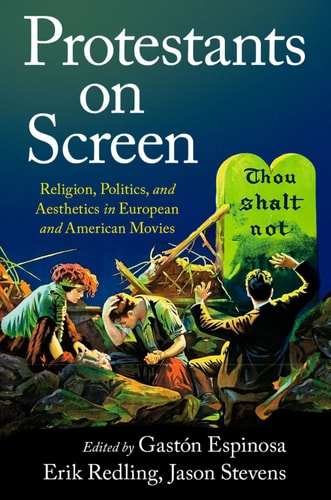
Protestants on Screen
0
0
As an Amazon Associate and affiliate partner, Menrva Books earns from qualifying purchases. Learn more
Author Description
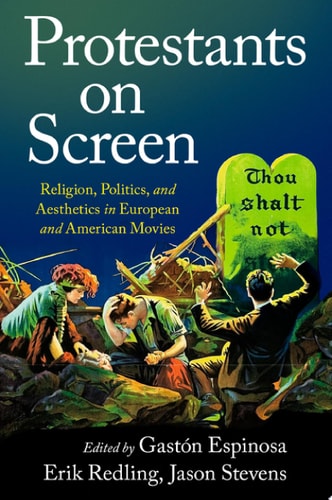
Protestants on Screen explores the Protestant contributions to American and European film from the silent era to the present day. The authors analyze how Protestant filmmakers, beliefs, theology, symbols, sensibilities, and cultural patterns have shaped the history of film. Challenging the stereotype of Protestants as world-denouncing-and-defying puritans and iconoclasts who stood in the way of film's maturation as an art, the authors contend that Protestants were among the key catalysts in the origins and development of film, bringing an identifiably Protestant aesthetic to the medium.The essays in this volume track key Protestant themes like faith and doubt, sin and depravity, biblical literalism, personal conversion and personal redemption, holiness and sanctification, moralism and pietism, Providence and secularism, apocalypticism, righteousness and justice, religion and race, the priesthood of all believers and its offshoots-democratization and individualism. Protestants, the essays in this volume demonstrate, helped birth and shape the film industry and harness the power of motion pictures for spiritual instruction, edification, and cultural influence.
Menrva's Summary
THE THESIS
This volume investigates the historical and theological influence of Protestantism on the development and aesthetic evolution of American and European cinema. Authors Erik Redling and Jason Stevens challenge the prevailing academic narrative that characterizes Protestantism as inherently hostile to visual media, arguing instead that Protestant beliefs and cultural patterns were foundational to the medium's maturation as an art form. By examining a wide range of films from the silent era to the contemporary period, the authors demonstrate how specific theological frameworks—such as the priesthood of all believers and concepts of personal redemption—informed the industry's growth and thematic output.
THE SCOPE MAP
What You Will Find
- Historical analysis of Protestant contributions to film from the silent era to the present.
- Examination of theological themes including sin, depravity, apocalypticism, and moralism.
- Discussion of the intersection between Protestant sensibilities and cultural patterns like individualism and democratization.
Scope Limits
- The text focuses primarily on American and European cinematic traditions.
- It does not provide an exhaustive survey of every Protestant-themed film but rather selects key case studies to illustrate broader arguments.
THE AUTHORITY PERSPECTIVE
Scholars and film historians recognize this work as a significant intervention in the study of religion and media, particularly for its effort to dismantle long-standing stereotypes regarding Protestant iconoclasm. Readers frequently note that the collection provides a nuanced framework for understanding how religious identity has historically shaped the visual language of modern cinema.
Page Count:
336
Publication Date:
2023-09-01
Publisher:
Oxford University Press Academic US
ISBN-10:
0190058935
ISBN-13:
9780190058937
Religion
Subjects & Themes
Social Sciences - Religion - Christianity
Protestantism
Religious
Film Studies
Cultural History
General
Criticism history
Media Studies
Community Tags
Similar Books