Split Screen Nation
0
0
As an Amazon Associate and affiliate partner, Menrva Books earns from qualifying purchases. Learn more
Author Description
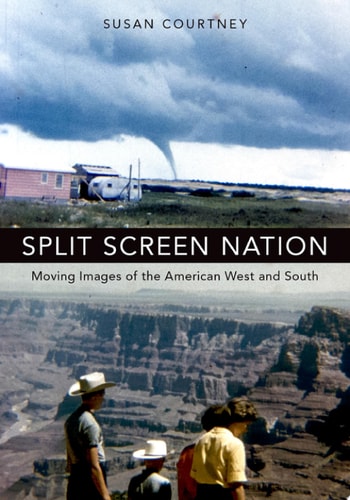
Split Screen Nation traces an oppositional dynamic between the screen West and the screen South that was unstable and dramatically shifting in the decades after WWII, and has marked popular ways of imagining the U.S. ever since. If this dynamic became vivid in Quentin Tarantino's Django Unchained (2012), itself arguably a belated response to Easy Rider (1969), this book helps us understand those films, and much more, through an eclectic history of U.S. screen media from the postwar era. It deftly analyzes not only Hollywood films and television, but also educational and corporate films, amateur films (aka home movies), and military and civil defense films featuring tests of the atomic bomb in the desert. Attentive to sometimes profoundly different contexts of production and consumption shaping its varied examples, Split Screen Nation argues that in the face of the Cold War and the civil rights struggle an implicit, sometimes explicit, opposition between the screen West and the screen South nonetheless mediated the nation's most paradoxical narratives--namely, land of the free/land of slavery, conquest, and segregation. Whereas confronting such contradictions head-on could capsize cohesive conceptions of the U.S., by now familiar screen forms of the West and the South split them apart to offer convenient, discrete, and consequential imaginary places upon which to collectively project avowed aspirations and dump troubling forms of national waste. Pinpointing some of the most severe yet understudied postwar trends fueling this dynamic--including non-theatrical film road trips, feature films adapted from Tennessee Williams, and atomic test films--and mining their potential for more complex ways of thinking and feeling the nation, Split Screen Nation considers how the vernacular screen forms at issue have helped shape how we imagine not only America's past, but also the limits and possibilities of its present and future.
Menrva's Summary
THE THESIS
This book investigates how the oppositional dynamic between the screen West and the screen South has shaped American national identity and cultural narratives since the post-World War II era. Susan Courtney, a scholar of film and media, utilizes a diverse archive of visual materials to argue that these regional archetypes function as projection sites for national aspirations and contradictions. By examining how these screen forms mediate the tension between ideals of freedom and the realities of slavery, conquest, and segregation, the author provides a framework for understanding the persistent influence of these tropes on the American imagination.
THE SCOPE MAP
What You Will Find
- Analysis of Hollywood feature films alongside television, educational, corporate, and amateur home movies.
- Examination of military and civil defense films, specifically those documenting atomic bomb tests.
- Exploration of the influence of Tennessee Williams adaptations and non-theatrical road trip films.
Scope Limits
- The study focuses primarily on the postwar era through the early 21st century.
- The analysis does not provide an exhaustive history of all regional film tropes, concentrating specifically on the West-South binary.
THE AUTHORITY PERSPECTIVE
Scholars in the field of media studies recognize this work as a significant contribution to the understanding of how regional iconography functions within national discourse. Readers frequently note the academic density of the prose and the breadth of the archival research presented throughout the text.
Page Count:
400
Publication Date:
2017-01-01
Publisher:
Oxford University Press
ISBN-10:
0190459980
ISBN-13:
9780190459987
American History
Media Studies
Sociology
Film Studies
Cultural History
Community Tags
Similar Books