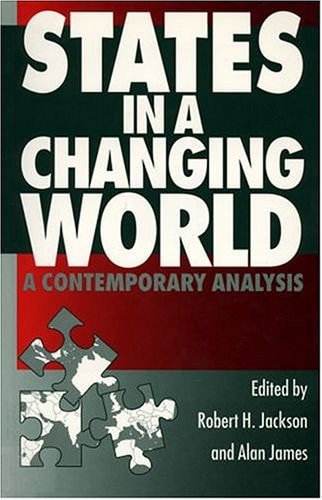
States in a Changing World: A Contemporary Analysis
0
0
As an Amazon Associate and affiliate partner, Menrva Books earns from qualifying purchases. Learn more
Author Description
Since 1945 the world has undergone vast and fundamental change. The collapse of colonial empires and the tensions of the Cold War produced great political turbulence in many areas and integrative movements in others. The end of the Cold War has triggered the breakdown of one of the superpowers and much turmoil elsewhere. To chart a way through these dramatic developments, leading scholars from Britain, Canada, the United States, and Australia present up-to-date surveys of the experience of the world's eleven geopolitical regions. They also consider the contemporary character of sovereign statehood, looking at both its enduring geographical and psychological bases and also at how it has been affected by economic interdependence and ethnicity. The result is an authoritative survey of the international scene during the second half of the twentieth century.
Menrva's Summary
THE THESIS
This work investigates how the concept of sovereign statehood has evolved and persisted amidst the geopolitical turbulence of the post-1945 era. The authors, Alan James and Robert H. Jackson, collaborate with an international panel of scholars to synthesize regional political developments. By examining the collapse of colonial empires, the Cold War, and the subsequent restructuring of global power, the text provides a framework for understanding the modern state's role in an increasingly interdependent world.
THE SCOPE MAP
What You Will Find
- Regional surveys covering eleven distinct geopolitical areas including North America, Europe, and Asia.
- Analysis of the impact of economic interdependence and ethnic conflict on national sovereignty.
- Comparative historical data regarding the transition from colonial rule to independent statehood.
- Theoretical exploration of the psychological and geographical foundations of the modern state.
THE AUTHORITY PERSPECTIVE
Experts recognize this volume as a comprehensive reference for understanding the structural shifts in international relations during the late twentieth century. Readers frequently note the academic density of the prose, which serves as a foundational text for students of political science and global history.
Page Count:
392
Publication Date:
1993-12-09
Publisher:
Oxford University Press
ISBN-10:
019827923X
ISBN-13:
9780198279235
History
International relations
State The
Geopolitics
Global Studies
Community Tags
Similar Books