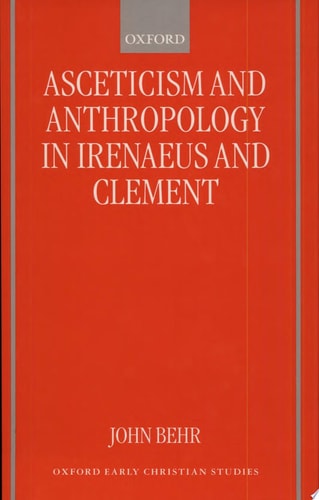
Asceticism and Anthropology in Irenaeus and Clement
0
0
As an Amazon Associate and affiliate partner, Menrva Books earns from qualifying purchases. Learn more
Author Description
Asceticism and Anthropology in Irenaeus and Clement examines the ways in which Irenaeus and Clement understood what it means to be human. By exploring these writings from within their own theological perspectives, John Behr also offers a theological critique of the prevailing approach to the asceticism of Late Antiquity. Writing before monasticism became the dominant paradigm of Christian asceticism, Irenaeus and Clement afford fascinating glimpses of alternative approaches. For Irenaeus, asceticism is the expression of man living the life of God in all dimensions of the body, that which is most characteristically human and in the image of God. Human existence as a physical being includes sexuality as a permanent part of the framework within which males and females grow towards God. In contrast, Clement depicts asceticism as man's attempt at a godlike life to protect the rational element, that which is distinctively human and in the image of God, from any possible disturbance and threat, or from the vulnerability of dependency, especially of a physical or sexual nature. Here human sexuality is strictly limited by the finality of procreation and abandoned in the resurrection. By paying careful attention to these two writers, Behr offers challenging material for the continuing task of understanding ourselves as human beings.
Menrva's Summary
THE THESIS
This work investigates how the early Christian thinkers Irenaeus and Clement defined the nature of humanity and the role of asceticism within their respective theological frameworks. John Behr, a scholar of patristic theology, examines these primary texts to challenge modern academic assumptions regarding the ascetic practices of Late Antiquity. By analyzing these authors before the rise of monasticism, Behr provides a critical re-evaluation of how early Christians integrated physical existence, sexuality, and the divine image into their understanding of the human condition.
THE SCOPE MAP
What You Will Find
- Comparative analysis of Irenaeus and Clement regarding human anthropology
- Theological critique of modern interpretations of Late Antique asceticism
- Examination of sexuality and procreation within early Christian doctrine
- Historical context of ascetic practices prior to the dominance of monasticism
THE AUTHORITY PERSPECTIVE
Scholars and theologians identify this text as a rigorous contribution to the study of early Christian anthropology and the development of ascetic thought. Readers frequently note the academic density of the prose and the precision with which Behr navigates complex patristic arguments.
Page Count:
280
Publication Date:
2000-11-23
Publisher:
Oxford University Press
ISBN-10:
0198270003
ISBN-13:
9780198270003
Religion
History
Philosophy
Asceticism
Patristics
Theological Anthropolgy
Christian Theology
Community Tags
Other Editions(3)
Similar Books