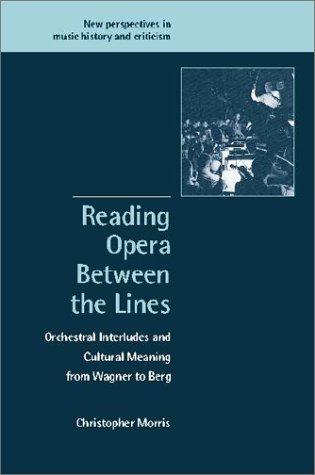
Reading Opera between the Lines
0
0
As an Amazon Associate and affiliate partner, Menrva Books earns from qualifying purchases. Learn more
Author Description
A characteristic feature of Wagnerian and post-Wagnerian opera is the tendency to link scenes with numerous and often surprisingly lengthy orchestral interludes, frequently performed with the curtain closed. Often taken for granted or treated as a filler by audiences and critics, these interludes can take on very prominent roles, representing dream sequences, journeys and sexual encounters. Combining studies of individual musical texts with an investigation of the critical discourse surrounding the operas, Christopher Morris investigates the implications of these important but strangely overlooked passages.--Jacket.
Menrva's Summary
THE THESIS
THE THESIS
This book investigates the significant but often overlooked role of orchestral interludes in Wagnerian and post-Wagnerian opera. Christopher Morris, drawing on his expertise in musicology and opera studies, examines how these passages, frequently performed with the curtain closed, function beyond mere filler. By analyzing individual musical texts and the surrounding critical discourse, Morris argues that these interludes are crucial in representing dream sequences, journeys, and intimate encounters, thereby revealing deeper layers of operatic meaning.
THE SCOPE MAP
- What You Will Find:
- Analysis of orchestral interludes in Wagnerian and post-Wagnerian operas.
- Examination of the critical discourse surrounding these musical passages.
- Case studies of individual musical texts and their interpretations.
- Exploration of interludes as representations of dream sequences, journeys, and sexual encounters.
THE AUTHORITY PERSPECTIVE
The Authority Perspective: This work is recognized for its in-depth exploration of a specific, often neglected aspect of operatic composition. By combining musical analysis with critical theory, the book offers a scholarly perspective on the function and significance of orchestral interludes. The approach is likely to appeal to academics and serious opera enthusiasts interested in a detailed examination of musical and narrative structures.
Page Count:
232
Publication Date:
2002-01-01
ISBN-10:
0521807387
ISBN-13:
9780521807388
Music
History
Philosophy
Non-Fiction
Musicology
Opera Studies
Music History
Community Tags
Similar Books