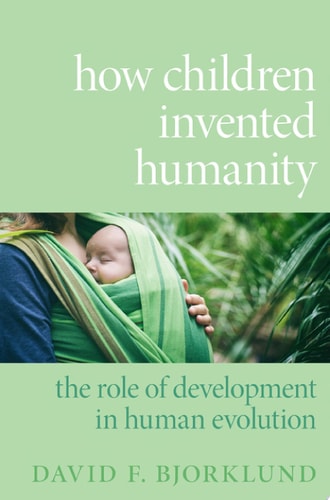
How Children Invented Humanity
0
0
As an Amazon Associate and affiliate partner, Menrva Books earns from qualifying purchases. Learn more
Author Description
Infants And Children Are The Often-ignored Heroes When It Comes To Understanding Human Evolution. Evolutionary Pressures Acted Upon The Young Of Our Ancestors More Powerfully Than On Adults, And Changes Over The Course Of Development In Our Ancestors Were Primarily Responsible For The Species And The People We Have Become. This Book Takes An Evolutionary Developmental Perspective, Emphasizing That Developmental Plasticity--the Ability To Change Our Physical And Psychological Selves Early In Life--is The Creative Force In Evolution, With Natural Selection Serving As A Filter, Eliminating Novel Developmental Outcomes That Did Not Benefit Survival. This Book Is About Becoming--of Becoming Human And Of Becoming Mature Adults. Bjorklund Asks, How Can An Understanding Of Human Development Help Us Better Understand Human Evolution? Then, Turning The Relation Between Evolution And Development On Its Head, Bjorklund Demonstrates How An Understanding Of Our Species' Evolution Can Help Us Better Understand Current Development And How To Better Rear Successful And Emotionally Healthy Children.
Menrva's Summary
THE THESIS
This book investigates how the evolutionary pressures acting upon human infants and children served as the primary driver for the development of modern human characteristics. David F. Bjorklund, a developmental psychologist, utilizes an evolutionary developmental framework to argue that developmental plasticity—the capacity for early physical and psychological change—acts as a creative force in evolution. By positioning natural selection as a filter for these developmental outcomes, the author provides a comprehensive analysis of how our species evolved through the maturation process.
THE SCOPE MAP
What You Will Find
- Analysis of developmental plasticity as a mechanism for evolutionary change
- Examination of the interplay between ancestral survival pressures and childhood development
- Theoretical framework connecting evolutionary history to modern child-rearing practices
Scope Limits
- Does not provide a comprehensive history of all hominid species
- Does not serve as a clinical manual for pediatric medicine
THE AUTHORITY PERSPECTIVE
Experts in the field of developmental psychology recognize this work as a significant contribution to the integration of evolutionary biology and child development studies. Readers frequently note the academic density of the prose, which is best suited for those with a background in behavioral sciences or evolutionary theory.
Page Count:
288
Publication Date:
2020-01-01
Publisher:
Oxford University Press
ISBN-10:
0190066873
ISBN-13:
9780190066871
Science
Evolutionary Psychology
Anthropology
Community Tags
Other Editions(2)
Similar Books