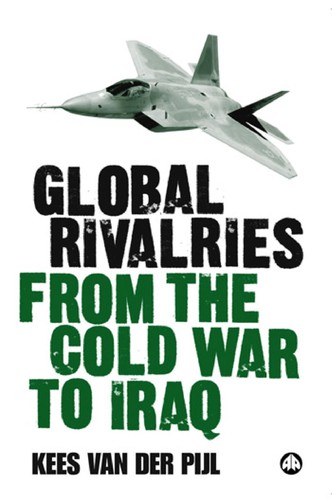
Global Rivalries: From the Cold War to Iraq
0
0
As an Amazon Associate and affiliate partner, Menrva Books earns from qualifying purchases. Learn more
Author Description
Offering a highly original analysis of world events, especially in the light of the Iraq war, Kees van der Pijl explores the history and development of relations between major countries in the international community. He examines the impact that successive wars and changes in the global political economy have had on the way states relate to each other today. The author argues that the rise of the English-speaking West has created rivalries between contender states that are never entirely put to rest. With each round of Western expansion, new rivalries are created. Offering a truly global analysis that covers every area of the world - from Europe and America to China, the Middle East, Latin America and Russia - he explores the development of international relations post-WWII, and questions whether the neoliberal project and its human rights ideology have collapsed back into authoritarianism under the guise of the 'war on terror'. Book jacket.--Jacket.
Menrva's Summary
THE THESIS
The book investigates the enduring nature of global rivalries and their evolution in the post-World War II era, particularly in light of the Iraq War. Kees van der Pijl, drawing on his expertise in international relations, analyzes the historical development of relationships between major global powers. He posits that the expansion of the English-speaking West has consistently generated new rivalries between contender states, which are never fully resolved. The analysis spans diverse regions including Europe, the Americas, China, the Middle East, and Russia, examining the impact of wars and shifts in the global political economy on contemporary state interactions.
THE SCOPE MAP
- Analysis of post-WWII international relations.
- Examination of the impact of successive wars on state relations.
- Exploration of changes in the global political economy.
- Argument regarding the cyclical creation of rivalries through Western expansion.
- Coverage of regions including Europe, America, China, the Middle East, and Russia.
- Critique of the neoliberal project and human rights ideology in the context of the 'war on terror'.
- Discussion on the potential collapse of neoliberalism into authoritarianism.
THE AUTHORITY PERSPECTIVE
The book offers a highly original analysis of world events, with a particular focus on the Iraq War and its implications for international relations. Van der Pijl's argument that Western expansion inherently creates unresolved rivalries is a central theme explored across a global scope. The work is noted for its comprehensive coverage of various regions and its critical examination of neoliberalism and its ideological underpinnings. The analysis questions the trajectory of international relations in the early 21st century.
Page Count:
488
Publication Date:
2006-01-01
ISBN-10:
0745325416
Non-Fiction
Politics
History
International relations
Geopolitics
Community Tags
Similar Books