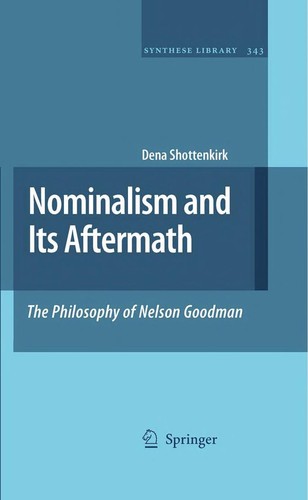
Nominalism and its Aftermath
0
0
As an Amazon Associate and affiliate partner, Menrva Books earns from qualifying purchases. Learn more
Author Description
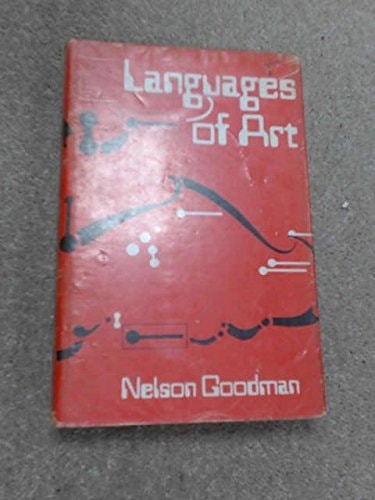
Nelson Goodman's disparate writings are often written about only within their own particular discipline, such that the epistemology is discussed in contrast to others' epistemology, the aesthetics is contrasted with more traditional aesthetics, and the ontology and logic is viewed in contrast to both other contemporary philosophers and to Goodman's historical predecessors. This book argues that that is not an adequate way to view Goodman. The separate disciplines of ontology, epistemology, and aesthetics should be viewed as sequential steps within his thought, such that each provides the ground rules for the next section and, furthermore, providing the reasons for limitations on the terms available to the subsequent writing(s). This is true not merely because this is the general chronology of his writing, but more importantly because within his metaphysics lies Goodman's basic nominalist ontology and logic, and it is upon those principles that he builds his epistemology and, furthermore, it is the sum of both the metaphysics and the epistemology, with the nominalist principle as the guiding force, which constructs the aesthetics. At the end of each section of this book, the consequent limitations imposed on his terms and concepts available to him are explicated, such that, by the end of the book, the book delineates the constraints imposed upon the aesthetics by both the metaphysics and the epistemology.--P. [4] of cover.
Menrva's Summary
THE THESIS
This book argues that Nelson Goodman's philosophical works, often treated in isolation, should be understood as a sequential progression where metaphysics grounds epistemology, which in turn shapes aesthetics. The author posits that Goodman's nominalist ontology and logic form the foundational principles upon which his epistemology is built. This combined framework then dictates the terms and concepts available for his aesthetic theories. The book systematically explicates the constraints imposed by each stage on the subsequent ones, culminating in a delineation of how metaphysics and epistemology shape Goodman's aesthetics.
THE SCOPE MAP
- What You Will Find:
- Analysis of Nelson Goodman's nominalist ontology and logic.
- Examination of the development of Goodman's epistemology from his metaphysical foundations.
- Exploration of how Goodman's metaphysics and epistemology constrain his aesthetic theories.
- Sequential explication of limitations imposed on concepts and terms at each stage of Goodman's thought.
- A unified view of Goodman's philosophy, integrating ontology, epistemology, and aesthetics.
THE AUTHORITY PERSPECTIVE
The book presents a cohesive argument for viewing Nelson Goodman's philosophy as an interconnected system rather than disparate disciplinary contributions. By tracing the progression from his nominalist metaphysics and logic through his epistemology to his aesthetics, the work aims to provide a more adequate understanding of his thought. The structure of the book is designed to highlight how each stage imposes limitations and defines the terms for the next. This approach offers a valuable perspective for scholars interested in Goodman's diverse philosophical output.
Page Count:
171
Publication Date:
2009-01-01
ISBN-10:
1402099304
ISBN-13:
9781402099304
Philosophy
Non-Fiction
Epistemology
Nominalism
Metaphysics
Aesthetics
Community Tags
Similar Books