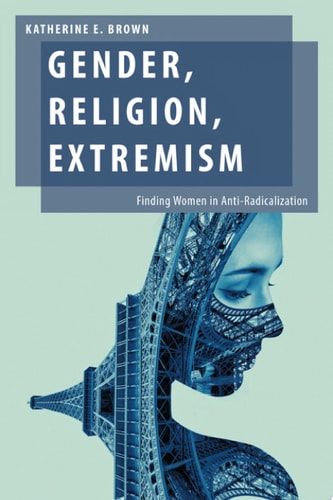
Gender, Religion, Extremism: Finding Women in Anti-Radicalization
0
0
As an Amazon Associate and affiliate partner, Menrva Books earns from qualifying purchases. Learn more
Author Description
Radicalization, and the terrorism that is frequently linked to it, have been subject to much study and governmental intervention. Nevertheless, the processes that lead to radicalization remain thinly conceptualized although governments and their agencies worldwide have invested heavily in counter and de-radicalization programs. There are at least 34 anti-radicalization programs worldwide, most of which were initiated post-2001, with a focus on Muslims and Muslim communities. These policies and programs have led to interventions in the daily lives of thousands, often in ways that push the boundaries of human rights law and norms. However, the effectiveness of these programs is unclear.This book compares anti-radicalization programs that target Islamic extremism in the UK, Saudi Arabia, Indonesia, the Netherlands and Pakistan. It looks particularly at the ways in which the program tactics differ depending on the gender of the target, arguing that the gendered way in which anti-radicalization is pursued helps to reveal its limitations. These programs fail to take into account how masculinity and femininity inform the radicalization process. Moreover, the programs tend to link men's radicalization to excessive, but flawed, masculinity, and women's radicalization to passivity, which consequentially limits understandings of the various modes of belief, belonging, and behavior of those they are trying to engage. Solutions for male de-radicalization hinge on particular ideals of masculinity that few men can obtain, while the de-radicalization of women is seen as a rescue mission. Although the rhetoric of battling terrorism is often couched in a narrative of "women's rights" and "liberal values", the book demonstrates that the consequences of the programs often run counter to such ideals.The book's findings are applicable not just to de-radicalization programs, but also to broader counter-radicalization agendas that address resilience and community engagement.
Menrva's Summary
THE THESIS
This book investigates how gendered assumptions within global anti-radicalization policies undermine the effectiveness of counter-terrorism programs. Katherine E. Brown, a scholar in gender and international security, utilizes a comparative analysis of state-led interventions to argue that current programs rely on flawed, binary understandings of masculinity and femininity. By examining how these policies target individuals based on gendered stereotypes, the author demonstrates that such approaches often fail to address the complex realities of belief and behavior in the communities they intend to influence.
THE SCOPE MAP
What You Will Find
- Comparative analysis of anti-radicalization programs in the UK, Saudi Arabia, Indonesia, the Netherlands, and Pakistan.
- Examination of gendered rhetoric in counter-terrorism policy.
- Analysis of how state interventions impact human rights and community engagement.
Scope Limits
- The study focuses primarily on programs targeting Islamic extremism and does not provide an exhaustive review of all global counter-radicalization initiatives.
THE AUTHORITY PERSPECTIVE
Experts in international relations and security studies identify this work as a critical contribution to the intersection of gender theory and counter-terrorism policy. Readers frequently note the academic rigor of the text and its utility for policymakers seeking to understand the limitations of current de-radicalization frameworks.
Page Count:
296
Publication Date:
2020-07-01
Publisher:
Oxford University Press
ISBN-10:
0190075694
ISBN-13:
9780190075699
Religion
Politics
Specific Topics
World politics
New Used & Rental Textbooks
Sociology
Intelligence
Gender Studies
International relations
Politics & Government
Community Tags
Similar Books