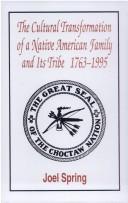
The Cultural Transformation of a Native American Family and Its Tribe, 1763-1995
0
0
As an Amazon Associate and affiliate partner, Menrva Books earns from qualifying purchases. Learn more
Author Description
This book describes the impact of U.S. government civilization and education policies on a Native American family and its tribe from 1763 to 1995. While engaged in a personal quest for his family's roots in Choctaw tribal history, the author discovered a direct relationship between educational policies and their impact on his family and tribe. Combining personal narrative with traditional historical methodology, the author details how federal education policies concentrated power in a tribal elite that controlled its own school system, segregating students by social class and race. The book opens with the cultural differences that existed between Native Americans and European colonists. The discussion of civilization policies begins with the 1790s, when President George Washington began and Thomas Jefferson continued to search for a means of gaining the lands occupied by the southern tribes, including the Choctaws. The story involves a complicated interaction between government policies, the agenda of White educators, and the desires of Native Americans. In a broader context, it is a study of the evolution of an American family from the extended support of the community and clan of the past to the present world of single parents adrift without community or family safety nets.
Menrva's Summary
THE THESIS
This book investigates the profound and lasting impact of U.S. government civilization and education policies on a Native American family and their tribe over more than two centuries. The author, Joel H. Spring, combines personal genealogical research into his Choctaw heritage with historical methodology to reveal how federal educational initiatives shaped tribal structures, concentrating power within an elite that subsequently controlled its own segregated school system. The narrative traces the evolution of cultural differences from initial contact with European colonists through the specific policies enacted by presidents like Washington and Jefferson aimed at land acquisition, detailing the complex interplay between government agendas, white educators' aims, and the aspirations of Native Americans.
THE SCOPE MAP
- Exploration of cultural differences between Native Americans and European colonists starting in 1763.
- Analysis of U.S. civilization policies beginning in the 1790s, focusing on land acquisition strategies.
- Detailed examination of federal education policies and their role in concentrating power within a tribal elite.
- Description of how the tribal school system segregated students by social class and race.
- Personal narrative tracing the author's family roots within Choctaw tribal history.
- Study of the evolution of an American family structure from community-based support to modern isolation.
- The complex interaction between government policies, white educators' agendas, and Native American desires.
THE AUTHORITY PERSPECTIVE
The book is recognized for its unique blend of personal narrative and rigorous historical analysis, offering a critical perspective on the long-term consequences of U.S. federal policies on Native American communities. Its examination of educational systems as tools of social and political control provides insight into the formation of tribal elites and the segregation of students. The work is also noted for its broader sociological commentary on the transformation of family structures in America. The author's dual approach, grounded in both his own ancestry and extensive historical research, lends a distinctive voice to the study of cultural assimilation and resistance.
Page Count:
210
Publication Date:
1996-01-01
ISBN-10:
0805823034
History
Non-Fiction
Education Policy
Sociology
Community Tags
Similar Books