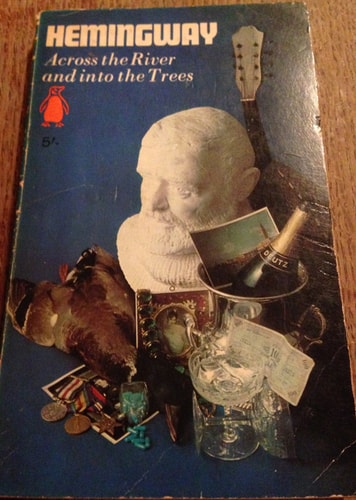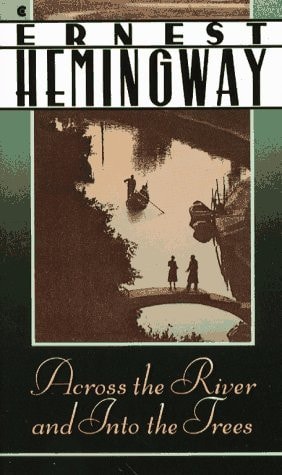
Across the River and into the Trees
0
0
As an Amazon Associate and affiliate partner, Menrva Books earns from qualifying purchases. Learn more
Author Description
In the fall of 1948, Ernest Hemingway made his first extended visit to Italy in thirty years. His reacquaintance with Venice, a city he loved, provided the inspiration for Across the River and into the Trees, the story of Richard Cantwell, a war-ravaged American colonel stationed in Italy at the close of the Second World War, and his love for a young Italian countess. A poignant, bittersweet homage to love that overpowers reason, to the resilience of the human spirit, and to the worldweary beauty and majesty of Venice, Across the River and into the Trees stands as Hemingway’s statement of defiance in response to the great dehumanizing atrocities of the Second World War. Hemingway’s last full-length novel published in his lifetime, it moved John O’Hara in The New York Times Book Review to call him ‘the most important author since Shakespeare.’
Menrva's Summary
THE PULSE
A war-weary American colonel confronts his own mortality and the remnants of his past while navigating a final, intense romantic connection in post-war Venice. Colonel Richard Cantwell, physically and emotionally scarred by his experiences in the Second World War, seeks solace in the city of Venice. His objective is to reconcile his internal disillusionment with the external beauty of the landscape and his affection for a young Italian countess. The narrative operates through a somber, reflective lens, focusing on the colonel's interactions as he navigates the physical decline of his health and the logical constraints of a life nearing its conclusion. The prose maintains a tight, minimalist framework that emphasizes the colonel's stoic resignation.
INSIDE THE PAGES
- Minimalist, declarative prose style characteristic of the author
- First-person perspective filtered through the colonel's internal monologue
- Vivid, atmospheric descriptions of the Venetian landscape
- Exploration of the psychological toll of combat
- Focus on the contrast between youth and aging
- Themes of existential defiance against historical trauma
- Dialogue-heavy sequences that reveal character through subtext
- Non-linear reflection on past military service
THE COLLECTIVE ECHO
Discussion often centers on the stark contrast between the novel's melancholic tone and the author's earlier, more action-oriented works. Readers frequently highlight the intense focus on the protagonist's internal state, noting how the narrative prioritizes mood and atmosphere over traditional plot progression. Critics have historically debated the effectiveness of the central romance, with some viewing it as a poignant exploration of human connection and others questioning its thematic integration. The work remains a subject of study for those interested in the author's late-career stylistic shifts and his preoccupation with mortality. Ultimately, the book serves as a meditative look at the lingering effects of global conflict on the individual spirit.
Page Count:
308
Publication Date:
1988-01-01
Publisher:
Dell Publishing
ISBN-10:
0020519206
ISBN-13:
9780020519201
Romance
Literary Fiction
War
Italy
Historical
Americans
classic