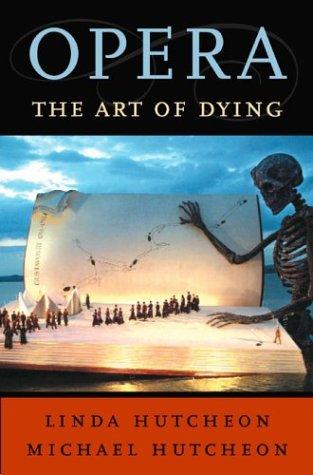
Opera: The Art of Dying
0
0
As an Amazon Associate and affiliate partner, Menrva Books earns from qualifying purchases. Learn more
Author Description
In Opera: The Art of Dying a physician and a literary theorist bring together scientific and humanistic perspectives on the lessons on living and dying that this extravagant and seemingly artificial art imparts--Jacket. Contrasting the experience of morality in opera to that in tragedy, the Hutcheons find a mote apt analogy in the medieval custom of contemplatio mortis - a dramatized exercise in imagining one's own death that prepared one for the inevitable end and helped one enjoy the life that remained. From the perspective of a contemporary audience, they explore concepts of mortality embodied in both the common and the more obscure operatic repertoire: the terror of death (in Poulene's Dialogues of the Carmelites); the longing for death (in Wagner's Tristan and Isolde); preparation for the good death (in Wagner's Ring of the Nibelung); and suicide (in Puccini's Madame Butterfly). In works by Janacek, Ullmann, Berg, and Britten, among others, the Hutcheons examine how death is made to feel logical and even right morally, psychologically, and artistically - how, in the art of opera, we rehearse death in order to give life meaning.--Jacket.
Menrva's Summary
THE THESIS
This book investigates how opera, a highly stylized art form, serves as a unique medium for exploring and understanding the human experience of mortality. The authors, a physician and a literary theorist, draw parallels between operatic portrayals of death and historical practices like contemplatio mortis to examine how opera can prepare audiences for death and imbue life with meaning. They analyze a range of operatic works, from the well-known to the obscure, to illustrate different facets of mortality as depicted in music and drama.
THE SCOPE MAP
- Analysis of mortality in opera, contrasting it with tragedy.
- Exploration of contemplatio mortis as an analogy for operatic engagement with death.
- Examination of the terror of death in Poulenc's Dialogues of the Carmelites.
- Discussion of the longing for death in Wagner's Tristan and Isolde.
- Analysis of preparation for a good death in Wagner's Ring of the Nibelung.
- Study of suicide in Puccini's Madame Butterfly.
- Investigation of how death is presented as logical and morally/psychologically/artistically right in works by Janacek, Ullmann, Berg, and Britten.
THE AUTHORITY PERSPECTIVE
The book is recognized for its interdisciplinary approach, merging medical and literary perspectives to analyze opera's engagement with mortality. Critics have noted its insightful examination of how operatic narratives and conventions help audiences confront and understand death, thereby enriching their appreciation of life. The authors' use of diverse operatic examples, from the familiar to the less common, provides a comprehensive exploration of the theme. The work is considered a significant contribution to both opera studies and the broader discourse on death and dying.
Page Count:
256
Publication Date:
2004-01-01
ISBN-10:
0674013263
ISBN-13:
9780674013261
History
Non-Fiction
Art
Music
Literary Criticism
Death Studies
Arts
Community Tags
Similar Books