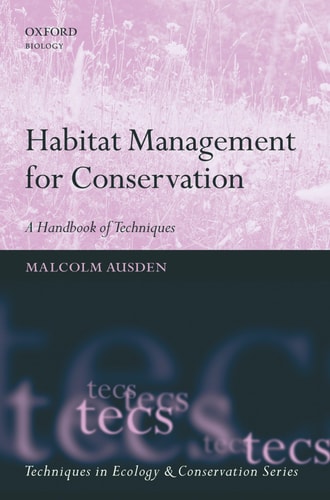
Habitat Management for Conservation: A Handbook of Techniques
0
0
As an Amazon Associate and affiliate partner, Menrva Books earns from qualifying purchases. Learn more
Author Description
Habitat management is commonly used to maintain and enhance the biological interest of many areas of semi-natural habitat where natural processes no longer create suitable conditions for desired species. Habitat restoration and creation is increasingly being used to increase the extent of ecologically important habitats in order to mitigate the impacts of human development. The modification of past management techniques and the introduction of new ones can provide additional benefits.Habitat Management for Conservation is a practical handbook which describes the general principles and techniques of managing and creating habitats throughout the world. The opening sections describe the general principles of managing land for biodiversity conservation. They include decision-making, mitigating the damaging effects of climate change, and monitoring the success of management. These are followed by a series of chapters which describe how to manage specific habitats: grasslands, shrublands, forests, scrub, freshwater wetlands, coastal habitats, arable land, urban areas and gardens. For each of these habitats the book discusses the main factors influencing their value for wildlife, highlights the key decisions that need to be made, and describes and compares the effects of individual management techniques.This comprehensive guide will be essential reading for graduate students as well as an invaluable resource for land managers, land-use advisors and others involved in conservation land management worldwide.
Menrva's Summary
THE THESIS
This handbook investigates the core question of how land managers can effectively maintain, restore, and create habitats to support biodiversity in landscapes where natural processes are insufficient. Author Malcolm Ausden provides a structured framework for conservation, drawing on global ecological principles to guide practitioners through the complexities of land management. The text synthesizes technical methodologies with decision-making strategies to address the ongoing challenges of human development and climate change.
THE SCOPE MAP
What You Will Find
- Comprehensive management strategies for diverse ecosystems including grasslands, forests, wetlands, and urban areas.
- Methodologies for monitoring conservation success and evaluating the efficacy of specific interventions.
- Decision-making frameworks for mitigating the impacts of climate change on semi-natural habitats.
- Comparative analysis of various land-use techniques and their biological outcomes for wildlife.
THE AUTHORITY PERSPECTIVE
Experts and practitioners frequently cite this work as a foundational technical manual for conservation professionals and graduate-level students. The text is noted for its high density of practical information and its utility as a standard reference tool in the field of applied ecology.
Page Count:
384
Publication Date:
2008-01-30
Publisher:
Oxford University Press
ISBN-10:
0198568738
ISBN-13:
9780198568735
Nature
Conservation
Ecology
Biodiversity conservation
Forest conservation
Reference
Biology
Community Tags
Other Editions(3)


Similar Books