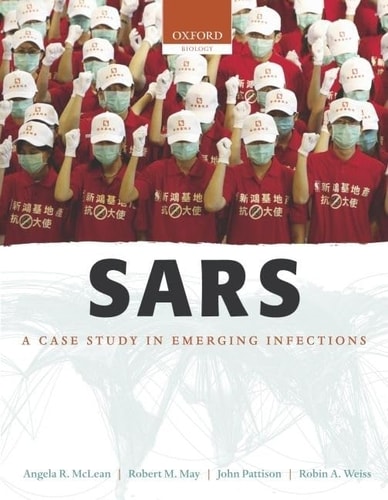
SARS: A Case Study in Emerging Infections
0
0
As an Amazon Associate and affiliate partner, Menrva Books earns from qualifying purchases. Learn more
Author Description
The sudden appearance and rapid spread of Severe Acute Respiratory Syndrome (SARS) in 2002 served to alert the world to the fact that emerging infections are a global problem. Living in affluent societies with well developed health care systems does not necessarily protect people from the dangers posed by life-threatening infections. The SARS epidemic tested global preparedness for dealing with a new infectious agent and raised important questions: how did we do, and what did we learn?This book uses the SARS outbreak as a case study to enumerate the generic issues that must be considered when planning the control of emerging infections. Emerging infections are more than just a current biological fashion: the bitter ongoing experience of AIDS and the looming threat of pandemic influenza teach us that the control of infectious disease is a problem we have not yet solved. Scientists from a broad range of disciplines - biologists, physicians, and policy-makers - all need to prepare. But prepare for what?SARS: A Case Study in Emerging Infections provides an up-to-date and accessible overview of the tasks that must be addressed by a community that wishes to confront emerging infections. Each chapter is written by a world expert and offers an authoritative and timely overview of its subject. While focusing on SARS, the book addresses a whole range of pertinent considerations and issues, from the use of new mathematical models to account for the spread of infection across global airline networks, to a discussion of the ethics of quarantining individuals in order to protect communities. The book will be of interest to students, academics, and policy makers working in the fields of disease ecology, medicine, and public health.
Menrva's Summary
THE THESIS
This book investigates how the 2002 SARS outbreak serves as a critical case study for understanding the broader challenges of managing emerging infectious diseases in a globalized world. The authors, a team of distinguished scientists and policy experts, utilize the SARS epidemic to evaluate global preparedness and identify the systemic failures and successes inherent in modern disease control. By synthesizing biological, medical, and policy-oriented perspectives, the text argues that infectious disease management requires a multi-disciplinary framework to address future pandemic threats effectively.
THE SCOPE MAP
What You Will Find
- Analysis of the 2002 SARS outbreak as a primary case study for emerging infections.
- Mathematical modeling techniques used to track infection spread across global airline networks.
- Ethical considerations regarding quarantine measures and individual rights versus public safety.
- Strategic frameworks for interdisciplinary collaboration between biologists, physicians, and policy-makers.
THE AUTHORITY PERSPECTIVE
Experts recognize this work as a foundational text for understanding the intersection of epidemiology and public policy. Readers frequently note the academic density of the prose, which makes it a standard reference for students and professionals in the field of disease ecology.
Page Count:
142
Publication Date:
2005-05-26
Publisher:
Oxford University Press
ISBN-10:
0198568193
ISBN-13:
9780198568193
History
Science
Medicine
Epidemiology
Communicable Diseases
Public Health
Community Tags
Other Editions(2)
Similar Books







Reader Comments
Share Your Thoughts
No comments yet. Be the first to share your thoughts!