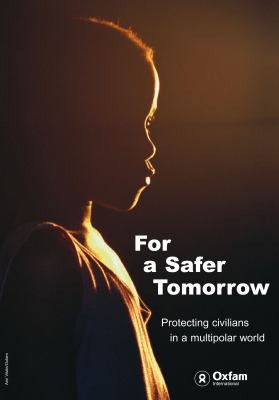
For a Safer Tomorrow
0
0
As an Amazon Associate and affiliate partner, Menrva Books earns from qualifying purchases. Learn more
Author Description
"Since the end of the Cold War, the number of armed conflicts in the world has fallen. But is this trend now about to be reversed? Climate change, poverty and inequality, and the wider availability of weapons all add to the risk of conflicts increasing." "In 1949, the Geneva Conventions enshrined people's rights to be protected from atrocities in conflict. Yet civilians are still killed, raped, and forced to flee their homes, 60 years on. In 2005, almost every government in the world agreed its Responsibility to Protect civilians. Many have failed to keep this promise. Governments must now make new efforts to take up the challenge in a rapidly changing 'multipolar' world, where China and the USA will be the 'superpowers', and where India, the European Union, Brazil, and others are gaining new global influence." "Many people feel that there is little that can be done to prevent the brutal targeting of civilians that characterises modern warfare. They are wrong. This report, based on Oxfam International's experience in most of the world's conflicts, sets out an ambitious agenda to protect civilians through combining local, national, and regional action with far more consistent international support."--book jacket.
Menrva's Summary
THE THESIS
The report argues that despite a decrease in armed conflicts since the Cold War, the risk of their resurgence is significant due to factors like climate change, poverty, and weapon availability. It details the persistent failures in protecting civilians, referencing the Geneva Conventions and the Responsibility to Protect doctrine, and highlights the inadequacy of current governmental and international responses in a shifting global power landscape. The author proposes a comprehensive agenda for civilian protection, drawing on Oxfam International's extensive field experience.
THE SCOPE MAP
- Analysis of the post-Cold War trend in armed conflicts and the potential for reversal.
- Examination of contributing factors to conflict escalation: climate change, poverty, inequality, and weapon proliferation.
- Review of international humanitarian law and protection doctrines, including the Geneva Conventions and the Responsibility to Protect.
- Critique of governmental and international failures in protecting civilians in conflict zones.
- Presentation of an agenda for civilian protection combining local, national, regional, and international actions.
- Insights derived from Oxfam International's experience in global conflicts.
- Discussion of the evolving 'multipolar' world order and its implications for conflict and protection.
THE AUTHORITY PERSPECTIVE
This report, drawing on Oxfam International's extensive experience, presents a critical analysis of global conflicts and civilian protection. It challenges the notion that little can be done to prevent atrocities in modern warfare by outlining an ambitious agenda for action. The work is grounded in the realities of international humanitarian law and the persistent failures to uphold promises of protection. It advocates for a multi-layered approach to safeguarding civilians in an increasingly complex geopolitical environment.
Page Count:
148
Publication Date:
2008-01-01
ISBN-10:
0855986301
ISBN-13:
9780855986308
Non-Fiction
Politics
International relations
Conflict Studies
Conflict Resolution
Community Tags
Similar Books