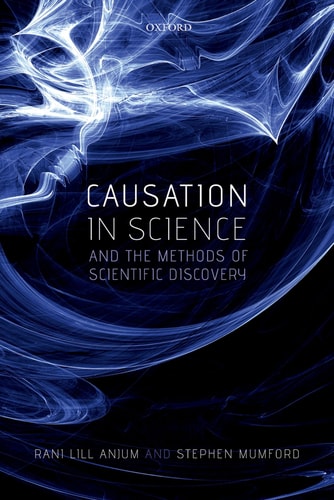
Causation in Science and the Methods of Scientific Discovery
0
0
As an Amazon Associate and affiliate partner, Menrva Books earns from qualifying purchases. Learn more
Author Description
Some of the chief goals of science - understanding, explanation, prediction, and application in new technologies - can only be conducted with any purpose if the world has some significant degree of constancy in what follows from what. While causal questions are relevant to all sciences and social sciences, how we discover causal connections is no easy matter. What is the source of such predictability and how does it operate? This is a question that goes beyond science itself and requires a philosophical approach. Causation is the main foundation upon which the possibility of science rests, but what methods should we adopt in order to identify causes in science? Causation often lies hidden and, as we must work to uncover it, it is vital we adopt the right methods in science for doing so and that we have a good philosophical understanding of what causation is. The choice of methods will inevitably reflect what one takes causation to be, making an accurate account of causation an even more pressing matter, as the enquiry concerns the correct norms for the empirical study of the world. In Causation in Science and the Methods of Scientific Discovery, Rani Lill Anjum and Stephen Mumford propose nine new norms of scientific discovery, recognising that some of the greatest challenges that we face can only be solved if we understand what has caused the problem and what, if anything, could then cause its alleviation.
Menrva's Summary
THE THESIS
This book investigates the fundamental nature of causation and proposes a new set of normative methods for scientific discovery. Authors Stephen Mumford and Rani Lill Anjum, both established philosophers of science, argue that scientific progress depends on a robust understanding of causal relationships. They contend that current scientific practices often lack a clear philosophical foundation, and they present a framework of nine norms designed to improve how researchers identify and analyze causes in empirical studies.
THE SCOPE MAP
What You Will Find
- A philosophical analysis of the relationship between causal theory and scientific methodology.
- A proposed framework of nine specific norms for scientific discovery.
- An examination of how causal predictability functions across both natural and social sciences.
- A critique of existing empirical methods in light of the authors' dispositional account of causation.
THE AUTHORITY PERSPECTIVE
Experts in the philosophy of science recognize this work as a significant contribution to the ongoing debate regarding causal inference and scientific methodology. Readers frequently note the academic density of the prose, which is best suited for those with a background in philosophy or advanced scientific research.
Page Count:
304
Publication Date:
2018-12-18
Publisher:
Oxford University Press
ISBN-10:
0198733666
ISBN-13:
9780198733669
Science
Philosophy
Logic
Causation
Scientific Method
Science
Epistemology
Community Tags
Similar Books