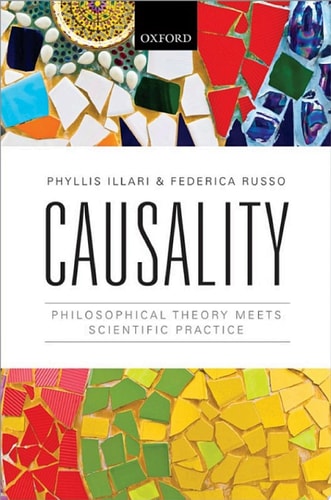
Causality: Philosophical Theory Meets Scientific Practice
0
0
As an Amazon Associate and affiliate partner, Menrva Books earns from qualifying purchases. Learn more
Author Description
Head hits cause brain damage - but not always. Should we ban sport to protect athletes? Exposure to electromagnetic fields is strongly associated with cancer development - does that mean exposure causes cancer? Should we encourage old fashioned communication instead of mobile phones to reduce cancer rates? According to popular wisdom, the Mediterranean diet keeps you healthy. Is this belief scientifically sound? Should public health bodies encourage consumption of fresh fruit and vegetables? Severe financial constraints on research and public policy, media pressure, and public anxiety make such questions of immense current concern not just to philosophers but to scientists, governments, public bodies, and the general public. In the last decade there has been an explosion of theorizing about causality in philosophy, and also in the sciences. This literature is both fascinating and important, but it is involved and highly technical. This makes it inaccessible to many who would like to use it, philosophers and scientists alike. This book is an introduction to philosophy of causality - one that is highly accessible: to scientists unacquainted with philosophy, to philosophers unacquainted with science, and to anyone else lost in the labyrinth of philosophical theories of causality. It presents key philosophical accounts, concepts and methods, using examples from the sciences to show how to apply philosophical debates to scientific problems.
Menrva's Summary
THE THESIS
This book investigates the complex relationship between philosophical theories of causality and their practical application within scientific research and public policy. Authors Federica Russo and Phyllis McKay Illari bridge the gap between abstract philosophical discourse and empirical scientific practice. By synthesizing diverse theoretical frameworks, they provide a structured methodology for evaluating causal claims in fields ranging from medicine to public health, ensuring that complex philosophical concepts are accessible to both scientists and non-specialists.
THE SCOPE MAP
What You Will Find
- An overview of major philosophical accounts of causality including probabilistic, mechanistic, and counterfactual theories.
- Practical methods for applying philosophical analysis to real-world scientific problems and public health debates.
- Case studies involving medical research, epidemiology, and environmental health risks.
Scope Limits
- The text does not provide an exhaustive history of every philosophical school of thought regarding causation.
- It does not offer specific policy recommendations for the health issues discussed, focusing instead on the analytical framework for evaluating them.
THE AUTHORITY PERSPECTIVE
Experts recognize this work as a vital bridge for interdisciplinary communication between the philosophy of science and active scientific research. Readers frequently note that the authors successfully distill highly technical academic debates into a format that remains rigorous while being approachable for those outside of professional philosophy.
Page Count:
325
Publication Date:
2014-01-01
Publisher:
OUP Oxford
ISBN-10:
0191639680
ISBN-13:
9780191639685
Science
Philosophy
Methodology
Mathematics Statistics
Epistemology
Science
Logic
Public Health
Causation
Probability
Community Tags
Similar Books