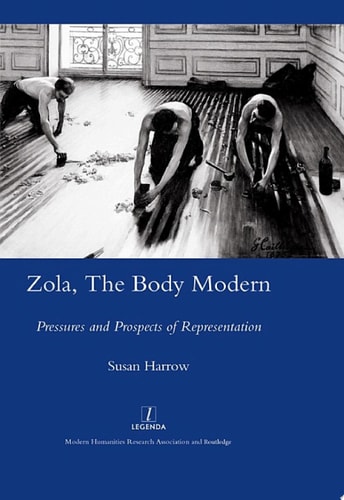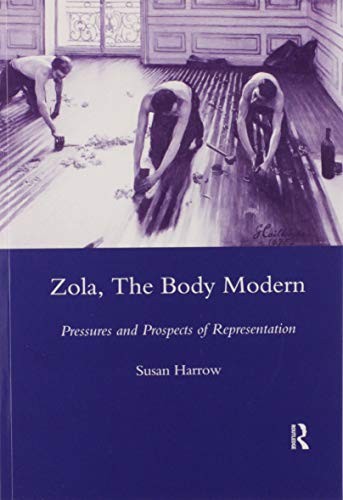
Zola, the Body Modern
0
0
As an Amazon Associate and affiliate partner, Menrva Books earns from qualifying purchases. Learn more
Author Description
Susan Harrow answers boldly in the affirmative, challenging the commonplace view that Zola's writing is predictable, prolix and transparent (what Barthes called 'readerly', for which read 'tedious'). Harrow exposes the modernist and postmodernist strategies which surface in the Romon-Macquart novels, and reveals Zola's innovatory representation of the body captured here at work, at war, at play, at rest, and in arresting abstraction. Informed by critical thought from Barthes and Deleuze to Michel de Certeau and Anthony Giddens, Zola, the Body Modern offers a model for how we can revitalize our understanding of the canonical nineteenth-century European novel, and learn to travel more flexibly between parameters of century-, style and aesthetics. --Book Jacket.
Menrva's Summary
THE THESIS
This book challenges the traditional view of Émile Zola's novels as predictable and tedious. Susan Harrow argues that Zola's Rougon-Macquart series employs modernist and postmodernist strategies, particularly in its innovative representation of the human body across various states and contexts. Drawing on critical theory from figures like Barthes and Deleuze, Harrow proposes a new framework for understanding canonical 19th-century European literature, encouraging a more flexible approach to stylistic and aesthetic analysis.
THE SCOPE MAP
- Analysis of modernist and postmodernist strategies in Zola's Rougon-Macquart novels.
- Exploration of Zola's representation of the body in diverse states: work, war, play, rest, and abstraction.
- Engagement with critical thought from Barthes, Deleuze, Michel de Certeau, and Anthony Giddens.
- Re-evaluation of Zola's work beyond the 'readerly' and 'tedious' categorization.
- Proposal of a model for revitalizing the understanding of 19th-century European novels.
- Encouragement of flexible travel between parameters of century, style, and aesthetics.
THE AUTHORITY PERSPECTIVE
The book offers a bold reinterpretation of Émile Zola's literary contributions, moving beyond conventional critical assessments. By highlighting modernist and postmodernist techniques, it aims to revitalize the study of 19th-century European novels. The work engages with significant post-structuralist and sociological thinkers to build its argument. This approach suggests a text that will appeal to scholars and students interested in literary theory and the analysis of canonical works.
Page Count:
240
Publication Date:
2020-01-01
ISBN-10:
0367603705
ISBN-13:
9780367603700
History
Non-Fiction
Romance
Body Studies
Modernism
Literary Criticism
Postmodernism