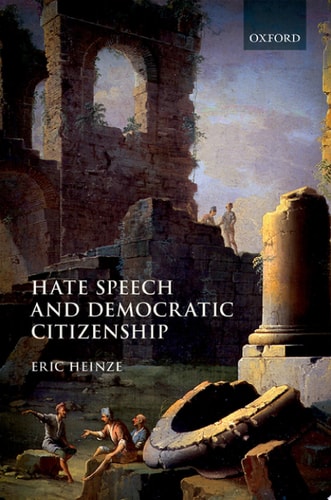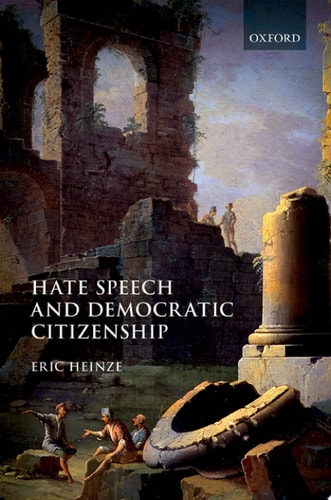
Hate Speech and Democratic Citizenship
0
0
As an Amazon Associate and affiliate partner, Menrva Books earns from qualifying purchases. Learn more
Author Description
Most modern democracies punish hate speech. Less freedom for some, they claim, guarantees greater freedom for others. Heinze rejects that approach, arguing that democracies have better ways of combatting violence and discrimination against vulnerable groups without having to censor speakers. Critiquing dominant free speech theories, Heinze explains that free expression must be safeguarded not just as an individual right, but as an essential attribute of democratic citizenship. The book challenges contemporary state regulation of public discourse by promoting a stronger theory of what democracy is and what it demands. Examining US, European, and international approaches, Heinze offers a new vision of free speech within Western democracies.
Menrva's Summary
THE THESIS
Does the regulation of hate speech in modern democracies fundamentally undermine the principles of democratic citizenship? Eric Heinze, a professor of law and legal theorist, evaluates the tension between state-mandated censorship and the preservation of free expression. He argues that current regulatory frameworks often fail to protect vulnerable groups effectively and proposes a re-evaluation of free speech as a core requirement of democratic participation rather than merely an individual liberty.
THE SCOPE MAP
What You Will Find
- Comparative analysis of legal frameworks in the United States, Europe, and international jurisdictions.
- A critique of prevailing free speech theories and their impact on public discourse.
- Examination of the relationship between state censorship and the protection of marginalized communities.
- A proposed normative framework for democratic citizenship that prioritizes open expression.
THE AUTHORITY PERSPECTIVE
Legal scholars and political theorists frequently cite this work for its rigorous challenge to conventional justifications for hate speech regulation. Experts highlight the text as a significant contribution to the ongoing debate regarding the limits of state power in democratic societies.
Page Count:
235
Publication Date:
2016-04-04
Publisher:
Oxford University Press
ISBN-10:
0198759029
ISBN-13:
9780198759027
Philosophy
Law
Professional Career & Trade
Sociology
Human rights
Freedom of speech
Hate speech