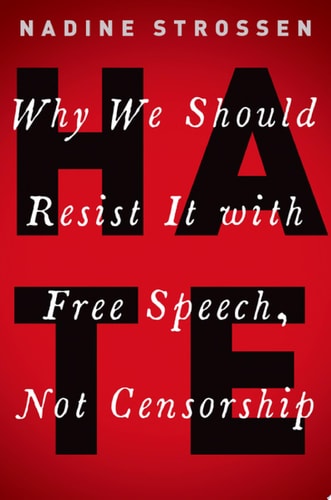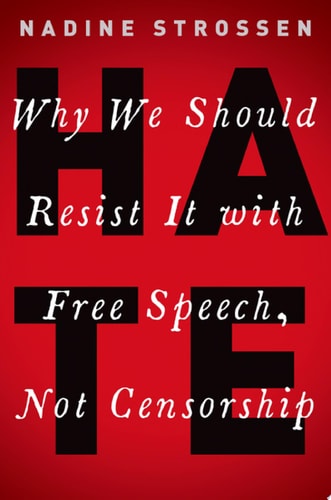
Hate: Why We Should Resist It with Free Speech, Not Censorship
0
0
As an Amazon Associate and affiliate partner, Menrva Books earns from qualifying purchases. Learn more
Author Description
Hate Dispels Misunderstandings Plaguing Our Perennial Debates About Hate Speech Vs. Free Speech, Showing That The First Amendment Approach Promotes Free Speech And Democracy, Equality, And Societal Harmony. We Hear Too Many Incorrect Assertions That Hate Speech -- Which Has No Generally Accepted Definition -- Is Either Absolutely Unprotected Or Absolutely Protected From Censorship. Rather, U.s. Law Allows Government To Punish Hateful Or Discriminatory Speech In Specific Contexts When It Directly Causes Imminent Serious Harm. Yet, Government May Not Punish Such Speech Solely Because Its Message Is Disfavored, Disturbing, Or Vaguely Feared To Possibly Contribute To Some Future Harm. When U.s. Officials Formerly Wielded Such Broad Censorship Power, They Suppressed Dissident Speech, Including Equal Rights Advocacy. Likewise, Current Politicians Have Attacked Black Lives Matter Protests As Hate Speech. Hate Speech Censorship Proponents Stress The Potential Harms Such Speech Might Further: Discrimination, Violence, And Psychic Injuries. However, There Has Been Little Analysis Of Whether Censorship Effectively Counters The Feared Injuries. Citing Evidence From Many Countries, This Book Shows That Hate Speech Laws Are At Best Ineffective And At Worst Counterproductive. Their Inevitably Vague Terms Invest Enforcing Officials With Broad Discretion, And Predictably, Regular Targets Are Minority Views And Speakers. Therefore, Prominent Social Justice Advocates In The U.s. And Beyond Maintain That The Best Way To Resist Hate And Promote Equality Is Not Censorship, But Rather, Vigorous Counterspeech And Activism.
Menrva's Summary
THE THESIS
This book investigates the efficacy of censorship as a tool for mitigating hate speech, arguing instead for the protection of free expression under the First Amendment. Nadine Strossen, a former president of the American Civil Liberties Union and a professor of law, utilizes her extensive legal background to analyze the intersection of constitutional law and social justice. She posits that government-led censorship is historically prone to abuse and often suppresses the very minority voices it intends to protect, suggesting that robust counterspeech is a more effective mechanism for societal progress.
THE SCOPE MAP
What You Will Find
- Analysis of U.S. First Amendment jurisprudence regarding speech restrictions.
- Comparative study of hate speech laws in various international jurisdictions.
- Examination of the historical misuse of censorship power against civil rights movements.
- Theoretical framework for the efficacy of counterspeech and activism.
Scope Limits
- Does not provide a universal definition of hate speech, as the author argues no such consensus exists.
- Does not focus on private platform moderation policies, concentrating primarily on government-enforced censorship.
THE AUTHORITY PERSPECTIVE
Legal scholars and civil libertarians frequently cite this work as a comprehensive defense of the traditional American approach to free expression. Readers often note the academic rigor and the extensive use of international case studies to support the author's arguments.
Page Count:
240
Publication Date:
2018-05-01
Publisher:
Oxford University Press, Incorporated
ISBN-10:
019085913X
ISBN-13:
9780190859138
Non-Fiction
Freedom of speech
Law
Civil Rights
Free Speech
Hate speech
Sociology
Community Tags
Other Editions(2)
Similar Books