
Introduction to Scanning Tunneling Microscopy
0
0
As an Amazon Associate and affiliate partner, Menrva Books earns from qualifying purchases. Learn more
Author Description
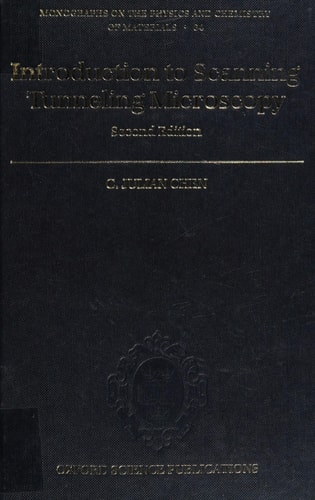
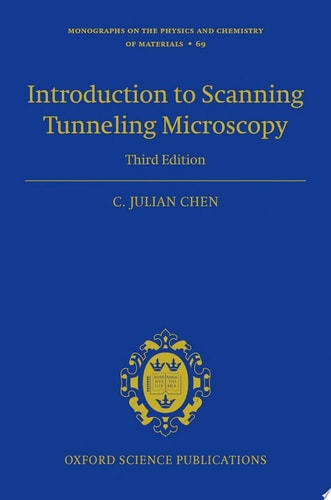
The scanning tunneling microscope and the atomic force microscope, both capable of imaging and manipulating individual atoms, were crowned with the Nobel Prize in Physics in 1986, and are the cornerstones of nanotechnology today. The first edition of this book has nurtured numerous beginners and experts since 1993. The second edition is a thoroughly updated version of this 'bible' in the field.The second edition includes a number of new developments in the field. Non-contact atomic-force microscopy has demonstrated true atomic resolution. It enables direct observation and mapping of individual chemical bonds. A new chapter about the underlying physics, atomic forces, is added. The chapter on atomic force microscopy is substantially expanded. Spin-polarized STM has enabled the observation of local magnetic phenomena down to atomic scale. A pedagogical presentation of the basic concepts is included. Inelastic scanning tunneling microscopy has shown the capability of studying vibrational modes of individual molecules. The underlying theory and new instrumentation are added. For biological research, to increase the speed of scanning to observe life phenomena in real time is a key. Advances in this direction are presented as well. The capability of STM to manipulate individual atoms is one of the cornerstones of nanotechnology. The theoretical basis and in particular the relation between tunneling and interaction energy are thoroughly presented, together with experimental facts.
Menrva's Summary
THE THESIS
This text investigates the fundamental physical principles, theoretical frameworks, and practical instrumentation required to operate scanning tunneling microscopes (STM) and atomic force microscopes (AFM). C. Julian Chen, a recognized expert in the field, synthesizes decades of research to provide a comprehensive manual for both students and practicing researchers. The book bridges the gap between quantum mechanical theory and experimental application, detailing how these tools enable the observation and manipulation of matter at the atomic scale. By integrating historical context with modern advancements, the author establishes a rigorous foundation for understanding surface science and nanotechnology.
THE SCOPE MAP
What You Will Find
- Theoretical derivation of tunneling current and interaction energy between atoms.
- Technical methodologies for non-contact atomic force microscopy and spin-polarized STM.
- Analysis of vibrational modes in individual molecules via inelastic scanning tunneling microscopy.
- Practical applications for real-time biological imaging and atomic manipulation.
THE AUTHORITY PERSPECTIVE
Experts and academics frequently cite this work as the foundational reference for the field of scanning probe microscopy. Readers often note the high level of technical density, which makes it a standard resource for graduate-level physics and materials science curricula.
Page Count:
488
Publication Date:
2016-02-15
Publisher:
Oxford University Press
ISBN-10:
0198754752
ISBN-13:
9780198754756
Science
Nanotechnology
Microscopy
Physics
Community Tags
Other Editions(5)

Similar Books












Reader Comments
Share Your Thoughts
No comments yet. Be the first to share your thoughts!