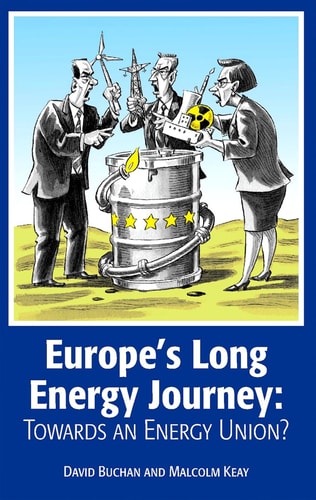
Europe's Long Energy Journey: Towards an Energy Union?
0
0
As an Amazon Associate and affiliate partner, Menrva Books earns from qualifying purchases. Learn more
Author Description
This book will explore how far the European Union can go towards forming its 28 member states into an Energy Union. It analyses how the EU can achieve its goal of providing energy affordability, security, and sustainability in the light of internal dynamics in European energy markets, and of the urgency in mitigating climate change. It also considers the increasingly unfavourable external context for the cost and security aspects of Europe's go-it-alone decarbonization effort created by oil price volatility and geo-political tensions with Russia.Chapter 1 provides an overview of past energy and climate decisions in order to situate current EU policy and successive chapters tackle the new energy challenges. The volume covers the growing tension between Brussels' campaign to liberalise and integrate energy markets through cross-border competition and trade, and increasing state intervention through national renewable subsidies that fragment the market. It also analyses the revolution in electricity markets and investment incentives turned upside down by renewable subsidies, and proposes a new market design to guide Europe through this uncharted territory.The book examines the need for flexible demand response from energy consumers as a match to increasingly inflexible energy supply from weather-dependent renewables. It also looks at the EU's 2030 targets and proposed emission trading and renewable energy reforms, and assesses how they measure up to the climate commitments of other countries as well as to the EU's long term climate aims. Underscoring the EU's inability to exist in its own energy bubble, two chapters analyse whether European industry can stay competitive with the rest of the world and how Europe is diversifying its energy sources away from Russia. The conclusion examines what a genuine energy union might mean in terms of EU governance of national energy policies, and how far short the EU will fall short of this.
Menrva's Summary
THE THESIS
This book investigates the feasibility and structural challenges of the European Union's attempt to consolidate its member states into a unified, coherent energy market. Authors David Buchan and Malcolm Keay, both established experts in energy policy, utilize a combination of historical policy analysis and economic market evaluation to assess the viability of the EU's goals. They argue that the tension between national sovereignty, market liberalization, and the urgent necessity of decarbonization creates a complex landscape that threatens the stability of the proposed Energy Union.
THE SCOPE MAP
What You Will Find
- Analysis of the conflict between EU-wide market integration and national renewable energy subsidies.
- Evaluation of the impact of geopolitical tensions with Russia on European energy security.
- Examination of electricity market design and the necessity for flexible demand response systems.
- Assessment of the 2030 climate targets and the competitiveness of European industry in a global context.
THE AUTHORITY PERSPECTIVE
Experts recognize this work as a comprehensive technical analysis of the structural hurdles facing European energy governance. Readers frequently note the academic density of the prose, which serves as a detailed reference for policymakers and students of international energy markets.
Page Count:
256
Publication Date:
2016-03-21
Publisher:
Oxford University Press
ISBN-10:
0198753306
ISBN-13:
9780198753308
Economics
European Union
Climate Change
Energy policy
International relations
Community Tags
Similar Books