Cold War, Cool Medium
0
0
As an Amazon Associate and affiliate partner, Menrva Books earns from qualifying purchases. Learn more
Author Description
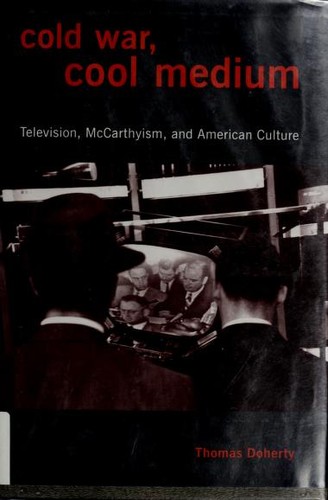
Conventional wisdom holds that television was a coconspirator in the repressions of Cold War America, that it was a facilitator to the blacklist and handmaiden to McCarthyism. But Thomas Doherty argues that, through the influence of television, America actually became a more open and tolerant place. Although many books have been written about this period, Cold War, Cool Medium is the only one to examine it through the lens of television programming.--Jacket.
Menrva's Summary
THE THESIS
This book challenges the prevailing view that television amplified the repressive nature of Cold War America. Thomas Patrick Doherty, a professor of American Studies, posits that television, contrary to popular belief, fostered a more open and tolerant society during this era. He examines how television programming, often seen as a tool of conformity, actually served to broaden perspectives and encourage dialogue. This work uniquely analyzes the Cold War period through the specific lens of television's content and influence, offering a counter-narrative to existing historical accounts.
THE SCOPE MAP
- Analysis of television's role in the McCarthy era and the Hollywood blacklist.
- Examination of how television programming contributed to social and political discourse.
- Exploration of the paradox of television as both a tool of conformity and a catalyst for openness.
- Case studies of specific television shows and their cultural impact.
- Doherty's argument for television's role in fostering a more tolerant American society.
- Comparison of television's influence with other media during the Cold War.
THE AUTHORITY PERSPECTIVE
This book offers a contrarian perspective on television's role during the Cold War, arguing for its capacity to foster tolerance rather than repression. The author's thesis challenges the common association of television with McCarthyism and the blacklist, proposing instead that the medium's reach and content ultimately opened American society. The work is noted for its unique focus on television programming as the primary lens through which to understand this complex historical period. It invites readers to reconsider the impact of early television on American culture and politics.
Page Count:
305
Publication Date:
2003-01-01
ISBN-10:
0231129521
History
Politics
Art
Non-Fiction
Media Studies
American Studies
Community Tags
Similar Books