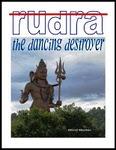
Rudra - The Dancing Destroyer
0
0
As an Amazon Associate and affiliate partner, Menrva Books earns from qualifying purchases. Learn more
Author Description
**rudraroopa** – an introduction From Shiva to Bharata, the knowledge of the dance of the destroyer It is said that Bharata, also referred to often as Bharata Muni, was the author of the Natya shastra, the treatise on drama, dance and performance. The shastra, supposed to have actually been written down in its present form between 400 BC and 200 BC, was handed down to Bharata by Tandu, one of Shiva’s attendants. With its genesis on formalising the Taandava nritya of the rudraroopa of Shiva, and extending it to create the framework for the genre of the various schools of dance in ancient India, the natya shastra of Bharata is more closely known to the classical dance form of Bharatanatyam. Bharata conveys through his Natya shastra and from the knowledge received from Tandu that the performance of the Taandava nritya takes the performer into a trance and helps experience the ecstasy of the divine. The dance of the greatest of all yogis, Shiva, in his rudraroopa, with all his fiery emotions and in an uncontrolled manner, is the ultimate pinnacle of dance through which the dancer can invoke God and experience godliness. Bharata’s Natya shastra also instructs about the art of depicting a stage-play or dance along with music and dance. It is said that the Natya shastra was derived from the Natya veda, supposed to be the fifth veda, and contained nearly 36,000 verses or shlokas. The Natya shastra as we now know it, contains 6,000 shlokas attributed to Bharata’s rendition and understanding of the Natya veda and the knowledge received from Shiva’s attendant, Tandu. It is said that Shiva had himself blessed the sage with the name, Bharata, signifying – bha for bhava (mood), ra for raaga (melody) and ta for taala (rhythm). Bharata is supposed to have written the Natya shastra in response to other munis or sages asking him about the Natya veda, and is depicted in a dialogue form. The rendition also informs that Bharata accepts that his knowledge is due to the blessings of B
Menrva's Summary
THE THESIS
The Natya Shastra, a foundational text on Indian performing arts, is explored through its divine origins and its connection to the cosmic dance of Shiva. This book delves into the transmission of this ancient treatise, purportedly handed down from Shiva's attendant Tandu to the sage Bharata Muni. It examines how the Natya Shastra, with its roots in the Rudra-roopa of Shiva's Tandava nritya, established the framework for classical Indian dance forms, most notably Bharatanatyam. The text also details the philosophical underpinnings of dance as a spiritual practice, capable of invoking the divine and fostering ecstatic experience.
THE SCOPE MAP
- The divine origin of the Natya Shastra, tracing its lineage from Shiva's Tandava nritya.
- The role of Bharata Muni as the conduit and author of the treatise.
- The connection between the Natya Shastra and the classical dance form of Bharatanatyam.
- The philosophical concept of dance as a path to spiritual ecstasy and divine experience.
- The structure and content of the Natya Shastra, including its relationship to the mythical Natya Veda.
- The etymology of the name 'Bharata' and its significance in relation to mood, melody, and rhythm.
- The dialogue format in which the Natya Shastra is presented, reflecting its transmission through sages.
THE AUTHORITY PERSPECTIVE
This work appears to offer a scholarly exploration of a seminal text in Indian performing arts. The subject matter suggests a focus on the historical and spiritual dimensions of dance and drama, likely appealing to academics, practitioners, and enthusiasts of Indian culture. The detailed examination of the Natya Shastra's origins and philosophical underpinnings indicates a text aimed at providing a comprehensive understanding of its significance. The inferred depth of research points to a valuable resource for those interested in the intersection of religion, art, and philosophy in ancient India.
Page Count:
50
Publication Date:
2009-01-01
ISBN-10:
9788190947
ISBN-13:
9789788190943
Art
History
Non-Fiction
Hinduism
Mythology
Dance
Community Tags
Similar Books