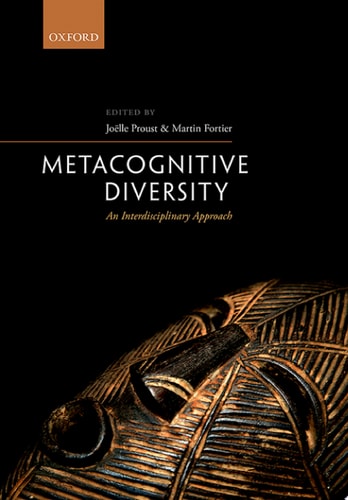
Metacognitive Diversity: An Interdisciplinary Approach
0
0
As an Amazon Associate and affiliate partner, Menrva Books earns from qualifying purchases. Learn more
Author Description
Metacognition refers to our awareness of our own mental processes, such as perceiving, remembering, learning, and problem solving. It is a fascinating area of research for psychologists, neuroscientists, anthropologists, sociologists and philosophers.This book explores the variability of metacognitive skills across cultures, since a person's decision to allocate effort, motivation to learn, sense of being right or wrong in perceptions, memories, and other cognitive tasks depends on specific transmitted goals, norms, and values. Across nineteen chapters, a group of leading authors analyze the variable and universal features associated with these dimensions, drawing on cutting-edge evidence.Additionally, new domains of metacognitive variability are considered in this volume, including those generated by metacognition-oriented embodied practices (present in rituals and religious worship), and culture-specific lay theories about subjective uncertainty and knowledge regarding natural or supernatural entities. It also documents universal metacognitive features, such as children's earlier sensitivity to their own ignorance than to that of others, people's intuitive understanding of what counts as knowledge, and speakers' sensitivity to informational sources (independently of the way the information is linguistically expressed).The book is important reading for students and scholars in cognitive and cultural psychology, anthopology, developmental and social psychology, linguistics, and philosophy.
Menrva's Summary
THE THESIS
This volume investigates the extent to which metacognitive processes—our awareness of mental functions like memory and perception—are shaped by cultural norms, values, and transmitted goals. Edited by Joëlle Proust and Martin Fortier, the work synthesizes contributions from a multidisciplinary panel of experts in psychology, neuroscience, and philosophy. The authors argue that while certain metacognitive features remain universal, the application of these skills is significantly influenced by the specific cultural and social environments in which individuals operate.
THE SCOPE MAP
What You Will Find
- Analysis of metacognitive variability across diverse cultural frameworks and social norms.
- Examination of embodied practices, such as religious rituals, and their impact on cognitive self-regulation.
- Evidence-based research on children's early sensitivity to their own ignorance versus the knowledge of others.
- Exploration of how lay theories regarding uncertainty and supernatural entities influence cognitive decision-making.
THE AUTHORITY PERSPECTIVE
Experts identify this collection as a significant interdisciplinary resource for scholars in cognitive psychology and anthropology. Readers frequently note the academic density of the prose, which serves as a comprehensive reference for those studying the intersection of culture and cognition.
Page Count:
480
Publication Date:
2018-06-05
Publisher:
Oxford University Press
ISBN-10:
0198789718
ISBN-13:
9780198789710
Psychology
Philosophy
Sociology
Linguistics
Anthropology
Metacognition
Community Tags
Similar Books