Gothicka
0
0
As an Amazon Associate and affiliate partner, Menrva Books earns from qualifying purchases. Learn more
Author Description
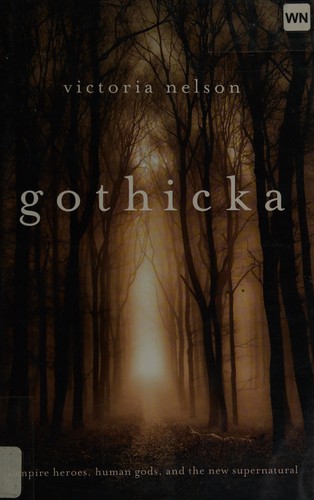
To explain the millennial shift away from the traditionally dark Protestant post-Enlightenment Gothic, Nelson studies the complex arena of contemporary Gothic subgenres that take the form of novels, films, and graphic novels. She considers the work of Dan Brown and Stephenie Meyer, graphic novelists Mike Mignola and Garth Ennis, Christian writer William P. Young (author of The Shack), and filmmaker Guillermo del Toro. She considers twentieth-century Gothic masters H.P. Lovecraft, Anne Rice, and Stephen King in light of both their immediate ancestors in the eighteenth century and the original Gothic--the late medieval period from which Horace Walpole and his successors drew their inspiration. Fictions such as the Twilight and Left Behind series do more than follow the conventions of the classic Gothic novel. They are radically reviving and reinventing the transcendental worldview that informed the West's premodern era. As Jesus becomes mortal in The Da Vinci Code and the child Ofelia becomes a goddess in Pan's Labyrinth, Nelson argues that this unprecedented mainstreaming of a spiritually driven supernaturalism is a harbinger of what a post-Christian religion in America might look like.
Menrva's Summary
THE THESIS
This book investigates the resurgence and transformation of Gothic themes in contemporary culture, particularly the millennial shift away from traditional Protestant post-Enlightenment Gothic. Victoria Nelson, a scholar of religion and literature, examines how modern subgenres in novels, films, and graphic novels are reviving and reinventing the transcendental worldview of the premodern era. She analyzes works by popular authors like Dan Brown and Stephenie Meyer, graphic novelists Mike Mignola and Garth Ennis, Christian writer William P. Young, and filmmaker Guillermo del Toro, placing them in dialogue with Gothic masters such as H.P. Lovecraft, Anne Rice, and Stephen King. Nelson argues that this mainstreaming of supernaturalism, seen in fictions where religious figures become mortal or characters achieve divine status, signals a potential post-Christian religious landscape in America.
THE SCOPE MAP
- Analysis of contemporary Gothic novels, including works by Dan Brown and Stephenie Meyer.
- Examination of graphic novels by Mike Mignola and Garth Ennis.
- Discussion of Christian author William P. Young and filmmaker Guillermo del Toro.
- Re-evaluation of twentieth-century Gothic masters like H.P. Lovecraft, Anne Rice, and Stephen King.
- Exploration of the original Gothic influences from the late medieval period.
- Consideration of the Twilight and Left Behind series as examples of Gothic revival.
- Argument for the mainstreaming of supernaturalism as a harbinger of post-Christian religion.
THE AUTHORITY PERSPECTIVE
The book is recognized for its ambitious scope, tracing the evolution of the Gothic from its medieval roots to its contemporary manifestations across various media. Scholars and critics have noted Nelson's insightful connections between popular culture and religious shifts, particularly her argument about the rise of supernaturalism signaling a post-Christian era. The work is seen as a significant contribution to Gothic studies and cultural analysis, offering a nuanced perspective on how enduring archetypes are reinterpreted for new generations. Its engagement with a wide range of contemporary and classic works provides a rich foundation for understanding modern spiritual and cultural trends.
Page Count:
333
Publication Date:
2012-01-01
ISBN-10:
0674050142
ISBN-13:
9780674050143
Fiction
Spirituality
Horror
History
Non-Fiction
Film Studies
Literary Criticism
Comics Studies
Gothic Studies
Community Tags
Similar Books