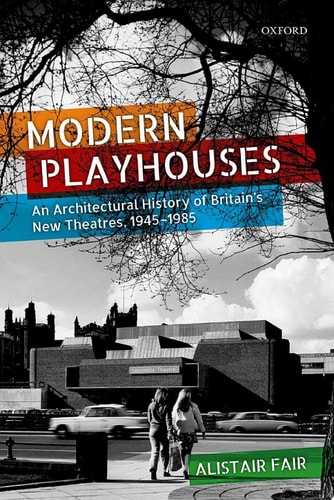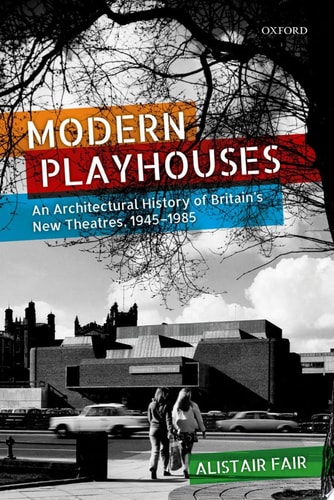
Modern Playhouses: An Architectural History of Britain's New Theatres, 1945-1985
0
0
As an Amazon Associate and affiliate partner, Menrva Books earns from qualifying purchases. Learn more
Author Description
Modern Playhouses is the first detailed study of the major programme of theatre-building which took place in Britain between the 1950s and the 1980s. Drawing on a vast range of archival material--much of which had never previously been studied by historians--it sets architecture in a wide social and cultural context, presenting the history of post-war theatre buildings as a history of ideas relating not only to performance but also to culture, citizenship, and the modern city.During this period, more than sixty major new theatres were constructed in locations from Plymouth to Inverness, Aberystwyth to Ipswich. The most prominent example was the National Theatre in London, but the National was only the tip of the iceberg. Supported in many cases by public subsidies, these buildings represented a new kind of theatre, conceived as a public service. Theatre was ascribed a transformative role, serving as a form of "productive" recreation at a time of increasing affluence and leisure. New theatres also contributed to debates about civic pride, urbanity, and community. Ultimately, theatre could be understood as a vehicle for the creation of modern citizens in a consciously modernizing Britain.Through their planning and appearance, new buildings were thought to connote new ideas of theatre's purpose. In parallel, new approaches to staging and writing posed new demands of the auditorium and stage. Yet while recognizing, as contemporaries did, that the new theatres of the post war decades represented change, Modern Playhouses also asks how radically different these buildings really were, and what their 'mainstream' architecture reveals of the history of modern British architecture, and of post-war Britain.
Menrva's Summary
THE THESIS
How did the rapid proliferation of theatre construction in post-war Britain reflect shifting ideologies regarding citizenship, urban development, and the role of public culture? Alistair Fair, a scholar of architectural history, utilizes extensive archival research to examine the construction of over sixty major theatres between 1945 and 1985. He argues that these structures were not merely functional performance spaces but were intentional instruments of social policy designed to foster civic pride and modernize the British public. By situating these buildings within their broader cultural context, the text demonstrates how architectural form was used to redefine the relationship between the state, the arts, and the individual.
THE SCOPE MAP
What You Will Find
- A comprehensive survey of over sixty major theatre projects constructed across Britain from 1950 to 1980.
- Analysis of the intersection between architectural design and the evolving requirements of theatrical staging and performance.
- Examination of primary archival sources, including government records, architectural plans, and contemporary cultural commentary.
- Exploration of the socio-political motivations behind public subsidies for the arts and the concept of theatre as a public service.
THE AUTHORITY PERSPECTIVE
Experts recognize this work as a definitive study of post-war British civic architecture and its cultural implications. Readers frequently note the meticulous archival detail and the author's ability to connect specific building designs to the broader political climate of the era.
Page Count:
320
Publication Date:
2018-05-22
Publisher:
Oxford University Press
ISBN-10:
0198807473
ISBN-13:
9780198807476
Architecture
History
Great Britain
Theaters construction
British History
urban planning