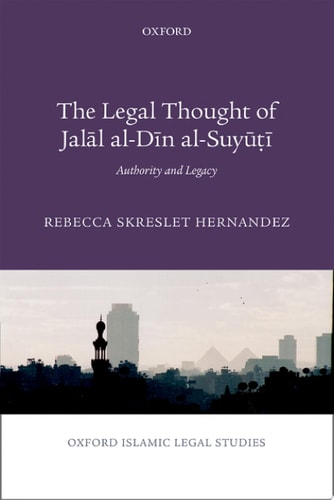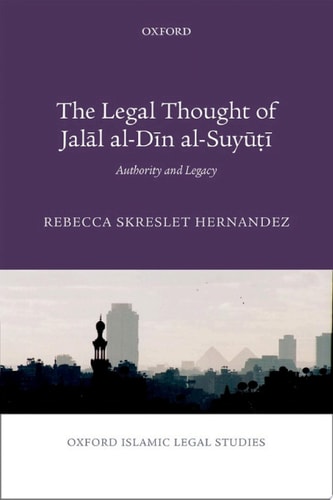
The Legal Thought of Jalal al-Din al-Suyuti: Authority and Legacy
0
0
As an Amazon Associate and affiliate partner, Menrva Books earns from qualifying purchases. Learn more
Author Description
This book offers a new theoretical perspective on the thought of the great fifteenth-century Egyptian polymath, Jalal al-Din al-Suyuti (d. 1505). In spite of the enormous popularity that al-Suyuti's works continue to enjoy amongst scholars and students in the Muslim world, he remains underappreciated by western academia.This project contributes to the fields of Mamluk Studies, Islamic Studies, and Middle Eastern Studies not only an interdisciplinary analysis of al-Suyuti's legal writing within its historical context, but also a reflection on the legacy of the medieval jurist to modern debates. The study highlights the discursive strategies that the jurist uses to construct his own authority and frame his identity as a superior legal scholar during a key transitional moment in Islamic history. The approach aims for a balance between detailed textual analysis and "big picture" questions of how legal identity and religious authority are constructed, negotiated and maintained.Al-Suyuti's struggle for authority as one of a select group of trained experts vested with the moral responsibility of interpreting God's law in society finds echoes in contemporary debates, particularly in his native land of Egypt. At a time when increasing numbers of people in the Arab world have raised their voices to demand democratic forms of government that nevertheless stay true to the principles of Shari'a, the issue of who has the ultimate authority to interpret the sources of law, to set legal norms, and to represent the "voice" of Shari'a principles in society is still in dispute.
Menrva's Summary
THE THESIS
This book investigates how the fifteenth-century Egyptian polymath Jalal al-Din al-Suyuti constructed his legal authority and identity within the shifting intellectual landscape of the Mamluk period. Rebecca Skreslet Hernandez utilizes a combination of historical contextualization and detailed textual analysis to examine al-Suyuti's legal writings. By situating the jurist within his specific temporal and cultural environment, the author argues that al-Suyuti's strategies for asserting scholarly legitimacy provide a framework for understanding broader historical and contemporary debates regarding the interpretation of Shari'a.
THE SCOPE MAP
What You Will Find
- An interdisciplinary analysis of Mamluk-era legal writing and intellectual history.
- A theoretical framework for examining the construction of religious and legal authority.
- Primary source analysis of al-Suyuti's legal treatises and personal writings.
- A comparative reflection on how medieval legal identity informs modern debates on governance and Shari'a in the Arab world.
THE AUTHORITY PERSPECTIVE
Scholars in the field of Islamic legal studies recognize this work as a significant contribution to the understanding of al-Suyuti's under-researched role in late medieval jurisprudence. Readers frequently note the academic density of the prose and the author's success in bridging historical textual analysis with contemporary questions of religious authority.
Page Count:
235
Publication Date:
2017-12-05
Publisher:
Oxford University Press
ISBN-10:
0198805934
ISBN-13:
9780198805939
Biography
History
Law_egypt
Islamic Studies
Legal History
Community Tags
Similar Books