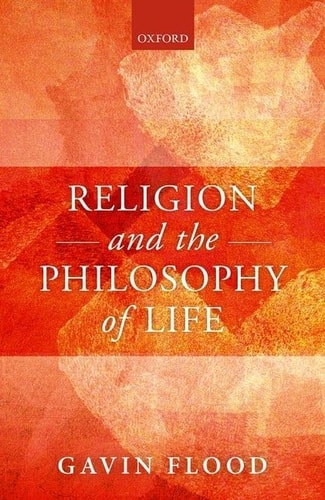
Religion and the Philosophy of Life
0
0
As an Amazon Associate and affiliate partner, Menrva Books earns from qualifying purchases. Learn more
Author Description
Religion and the Philosophy of Life considers how religion as the source of civilization transforms the fundamental bio-sociology of humans through language and the somatic exploration of religious ritual and prayer. Gavin Flood offers an integrative account of the nature of the human, based on what contemporary scientists tell us, especially evolutionary science and social neuroscience, as well as through the history of civilizations. Part one contemplates fundamental questions and assumptions: what the current state of knowledge is concerning life itself; what the philosophical issues are in that understanding; and how we can explain religion as the driving force of civilizations in the context of human development within an evolutionary perspective. It also addresses the question of the emergence of religion and presents a related study of sacrifice as fundamental to religions' views about life and its transformation. Part two offers a reading of religions in three civilizational blocks--India, China, and Europe/the Middle East--particularly as they came to formation in the medieval period. It traces the history of how these civilizations have thematised the idea of life itself. Part three then takes up the idea of a life force in part three and traces the theme of the philosophy of life through to modern times. On the one hand, the book presents a narrative account of life itself through the history of civilizations, and on the other presents an explanation of that narrative in terms of life.
Menrva's Summary
THE THESIS
This work investigates how religion functions as a primary driver of human civilization by transforming biological and social structures through language and ritual. Gavin Flood, a scholar of religious studies, synthesizes insights from evolutionary science, social neuroscience, and historical analysis to construct an integrative framework. He argues that religious practices, particularly sacrifice and prayer, are essential mechanisms that have shaped the human experience of life across diverse global civilizations.
THE SCOPE MAP
What You Will Find
- An evolutionary and neuroscientific analysis of the emergence of religious behavior.
- A comparative study of civilizational blocks including India, China, and the Middle East.
- An examination of the concept of 'life force' from the medieval period to the modern era.
- A theoretical framework linking somatic ritual practices to the development of human language and social organization.
THE AUTHORITY PERSPECTIVE
Scholars and readers frequently note the ambitious scope of this text, which bridges the gap between biological sciences and the humanities. Experts highlight the book as a significant contribution to the philosophy of religion, particularly for its interdisciplinary approach to understanding the historical development of human consciousness.
Page Count:
464
Publication Date:
2019-04-28
Publisher:
Oxford University Press
ISBN-10:
0198836120
ISBN-13:
9780198836124
Religion
History
Philosophy
Neuroscience
Sociology
Religion
Life
Evolutionary Biology