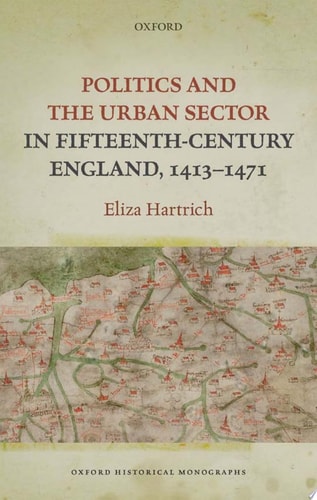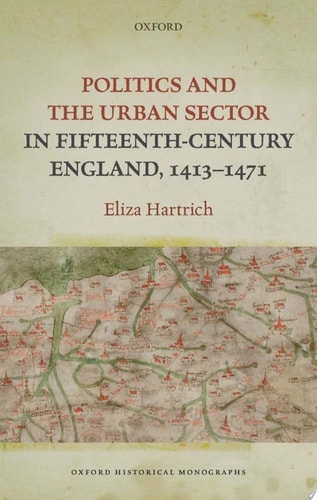
Politics and the Urban Sector in Fifteenth-Century England, 1413-1471
0
0
As an Amazon Associate and affiliate partner, Menrva Books earns from qualifying purchases. Learn more
Author Description
Since the mid-twentieth century, political histories of late medieval England have focused almost exclusively on the relationship between the Crown and aristocratic landholders. Such studies, however, neglect to consider that England after the Black Death was an urbanising society. Towns not only were the residence of a rising proportion of the population, but were also the stages on which power was asserted and the places where financial and military resources were concentrated. Outside London, however, most English towns were small compared to those found in contemporary Italy or Flanders, and it has been easy for historians to under-estimate their ability to influence English politics.Politics and the Urban Sector in Fifteenth-Century England, 1413-1471 offers a new approach for evaluating the role of urban society in late medieval English politics. Rather than focusing on English towns individually, it creates a model for assessing the political might that could be exerted by towns collectively as an 'urban sector'. Based on primary sources from twenty-two towns (ranging from the metropolis of London to the tiny Kentish town of Lydd), Politics and the Urban Sector demonstrates how fluctuations in inter-urban relationships affected the content, pace, and language of English politics during the tumultuous fifteenth century. In particular, the volume presents a new interpretation of the Wars of the Roses, in which the relative strength of the 'urban sector' determined the success of kings and their challengers and moulded the content of the political programmes they advocated.
Menrva's Summary
THE THESIS
This work investigates how the collective political influence of English towns, rather than individual urban centers, shaped the trajectory of national politics during the fifteenth century. Eliza Hartrich, a specialist in late medieval English history, challenges the traditional historiographical focus on the Crown and aristocracy. By analyzing primary source material from twenty-two diverse urban centers, she constructs a framework that positions the 'urban sector' as a critical, often overlooked, power broker in the political landscape of the Wars of the Roses.
THE SCOPE MAP
What You Will Find
- Analysis of political dynamics in twenty-two English towns ranging from London to Lydd.
- A model for evaluating the collective political weight of the urban sector.
- Examination of the relationship between urban financial resources and national political programs.
- Reinterpretation of the Wars of the Roses through the lens of urban influence.
THE AUTHORITY PERSPECTIVE
Historians recognize this monograph as a significant contribution to late medieval studies for its shift away from purely aristocratic narratives. Scholars frequently cite the text for its rigorous use of primary sources and its innovative methodology in quantifying the political agency of smaller urban centers.
Page Count:
288
Publication Date:
2019-10-08
Publisher:
Oxford University Press
ISBN-10:
0198844425
ISBN-13:
9780198844426
History
British History
Cities And Towns
Urban History
Political History