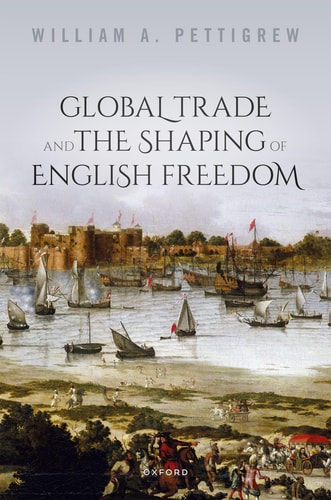
Global Trade and the Shaping of English Freedom
0
0
As an Amazon Associate and affiliate partner, Menrva Books earns from qualifying purchases. Learn more
Author Description
This book offers a new account of the connections between seventeenth century English history and the history of the rest of the world. Eschewing nationalist narratives, it demonstrates how greater engagement with the world beyond Europe shaped signature aspects of the English experience. Early modern trading corporations are the central actors in the story. Global Trade and the Shaping of English Freedom offers a profoundly altered reading of the practices of these entities. The companies were not monolithic entities pursuing narrow nationalist interests overseas. Nor were they inefficient monopolies doomed to commercial failure. In the seventeenth century, as this book shows, they were driven and transformed by the immediate and local interests of Company agents and their foreign networks. Because the trading companies were the most important bridge between international contexts and English legal and political debates, they connect non-European power and preference to those debates. These unappreciated actors within the corporate sphere play leading roles in this book as the shapers of English debate about the meaning of English freedom and the futures of the trades they participated in overseas. The book offers a new perspective on the foreign actors who shaped English commercial and legal ideas and practices in the seventeenth century, as well as the Ottoman, Bantenese, Huedan, Siamese, and Mughal contributions to the ideological, institutional, and procedural underpinnings that would develop, slowly but surely, into the British Empire.
Menrva's Summary
THE THESIS
This book investigates how seventeenth-century global trading corporations functioned as critical conduits between international political realities and the development of English legal and ideological concepts of freedom. William A. Pettigrew, a historian specializing in early modern commercial history, challenges traditional nationalist historiography by centering the role of trading companies. He argues that these entities were not merely state-aligned monopolies but were dynamic organizations shaped by local agents and foreign networks. By integrating non-European perspectives from the Ottoman, Bantenese, Huedan, Siamese, and Mughal spheres, the author demonstrates how external interactions fundamentally altered the trajectory of English institutional development.
THE SCOPE MAP
What You Will Find
- Analysis of seventeenth-century English trading corporations as primary political and legal actors.
- Examination of the influence of non-European powers, including the Mughal and Ottoman empires, on English commercial ideology.
- A methodology that prioritizes the agency of individual company representatives and their foreign networks over monolithic state interests.
- Evidence derived from corporate records, legal debates, and historical accounts of international trade relations.
THE AUTHORITY PERSPECTIVE
Scholars recognize this work as a significant revisionist contribution to the study of the British Empire's origins. Readers frequently note the academic density of the prose and the author's meticulous attention to the interplay between global commerce and domestic political philosophy.
Page Count:
240
Publication Date:
2024-01-01
Publisher:
Oxford University Press
ISBN-10:
0198846711
ISBN-13:
9780198846710
History
Renaissance
Political History
Global History
Economic History
British History
Community Tags
Other Editions(2)
Similar Books