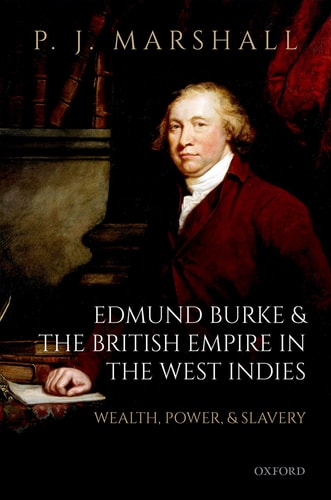
Edmund Burke and the British Empire in the West Indies: Wealth, Power, and Slavery
0
0
As an Amazon Associate and affiliate partner, Menrva Books earns from qualifying purchases. Learn more
Author Description
Edmund Burke was both a political thinker of the utmost importance and an active participant in the day-to-day business of politics. It is the latter role that is the concern of this book, showing Burke engaging with issues concerning the West Indies, which featured so largely in British concerns in the later eighteenth century. Initially, Burke saw the islands as a means by which his close connections might make their fortunes, later he was concerned with them as a great asset to be managed in the national interest, and, finally, he became a participant in debates about the slave trade.This volume adds a new dimension to assessments of Burke's views on empire, hitherto largely confined to Ireland, India, and America, and explores the complexities of his response to slavery. The system outraged his abundantly attested concern for the suffering caused by abuses of British power overseas, but one which he also recognised to be fundamental for sustaining the wealth generated by the West Indies, which he deemed essential to Britain's national power. He therefore sought compromises in the gradual reform of the system rather than immediate abolition of the trade or emancipation of the slaves.
Menrva's Summary
THE THESIS
This book investigates how Edmund Burke, a prominent political thinker, navigated the ethical and economic contradictions of the British Empire's involvement in the West Indies during the eighteenth century. P. J. Marshall, a distinguished historian of the British Empire, utilizes primary correspondence and parliamentary records to examine Burke's evolving stance on colonial wealth and human rights. The text argues that Burke’s political pragmatism forced him to balance his moral opposition to the abuses of power with his belief that the West Indian economy was vital to British national stability.
THE SCOPE MAP
What You Will Find
- Analysis of eighteenth-century British colonial policy in the Caribbean.
- Examination of Burke's personal and political connections to West Indian financial interests.
- Evaluation of the tension between economic reliance on slavery and humanitarian reform.
- Historical context regarding the debates over the slave trade and colonial management.
THE AUTHORITY PERSPECTIVE
Historians and scholars of political theory recognize this work as a vital contribution to understanding the nuances of Burke’s imperial philosophy. Experts frequently cite the text for its balanced approach to the complexities of eighteenth-century political life and its avoidance of simplistic moralizing.
Page Count:
272
Publication Date:
2019-09-04
Publisher:
Oxford University Press
ISBN-10:
0198841205
ISBN-13:
9780198841203
History
Biography
Colonialism
Atlantic Ocean
British History
Slavery
Great Britain
Community Tags
Similar Books