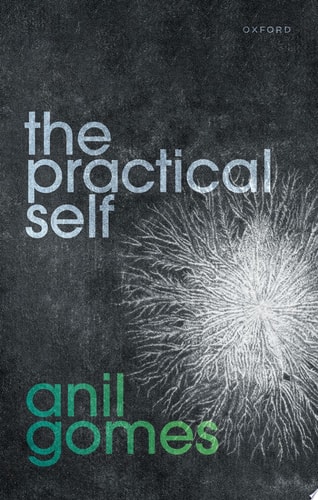
The Practical Self
0
0
As an Amazon Associate and affiliate partner, Menrva Books earns from qualifying purchases. Learn more
Author Description
We are self-conscious creatures thrown into a world which is not of our making. What is the connection between being self-conscious and being related to an objective world? Descartes and Kant, in different ways and with different emphases, argued that self-conscious subjects such as us must be related to an objective world. Philosophers in the twentieth century were less ambitious: self-conscious subjects must only think or experience the world as objective. The Practical Self argues that the answer to our question lies in a set of enigmatic remarks by the eighteenth-century philosopher, physicist, and aphorist Georg Christoph Lichtenberg. 'One should say it is thinking, just as one says, it is lightning', Lichtenberg writes. 'To say cogito is already too much To assume the I, to postulate it, is a practical requirement.' Lichtenberg is raising a puzzle here about our grounds for recognising ourselves as the agents of our thinking. Its solution is to understand that we have practical grounds to think of ourselves as the intellectual agents. We are thus practical selves: intellectual agents who have distinctively practical grounds to recognise ourselves as such. And our faith in ourselves as practical selves is sustained through interaction with others. The argument of this book is that self-consciousness requires faith in ourselves as the agents of our thinking and that this faith is sustained by a practices which relate us to other thinkers. Self-consciousness connects us to a world of others.
Menrva's Summary
THE THESIS
This book investigates the fundamental connection between self-consciousness and our status as agents within an objective world. Prof. Anil Gomes, a philosopher specializing in the history of philosophy and the philosophy of mind, examines the tension between Cartesian subjectivity and the objective world. By analyzing the enigmatic aphorisms of Georg Christoph Lichtenberg, the author proposes that our recognition of ourselves as intellectual agents is not a theoretical certainty but a practical requirement sustained through social interaction.
THE SCOPE MAP
What You Will Find
- A critical analysis of the philosophical transition from Descartes and Kant to twentieth-century perspectives on self-consciousness.
- An examination of Georg Christoph Lichtenberg’s aphoristic writings regarding the nature of the 'I' and intellectual agency.
- A philosophical framework defining the 'practical self' as an agent whose self-recognition relies on social practices.
- An exploration of how faith in one's own agency is mediated and maintained through relationships with other thinkers.
THE AUTHORITY PERSPECTIVE
Scholars in the field of philosophy of mind view this work as a rigorous contribution to the ongoing debate regarding the nature of the self. Readers frequently note the academic density of the prose, which requires a foundational understanding of Kantian and post-Kantian thought to fully grasp the author's arguments.
Page Count:
208
Publication Date:
2024-01-01
Publisher:
Oxford University Press
ISBN-10:
0198864906
ISBN-13:
9780198864905
Philosophy
Politics
Non-Fiction
Consciousness & Thought
Metaphysics
Epistemology
Philosophy of
Self-awareness
Community Tags
Similar Books