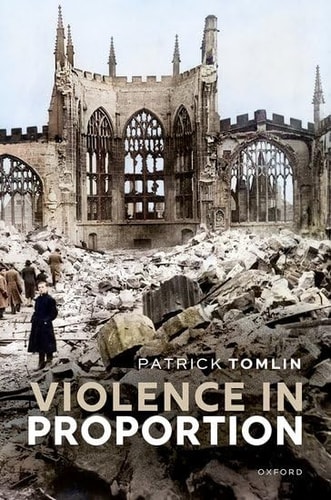
Violence in Proportion
0
0
As an Amazon Associate and affiliate partner, Menrva Books earns from qualifying purchases. Learn more
Author Description
We would either need to endorse unlimited harm (such as killing to prevent a scratch), or an outright ban on harming others (unable to scratch to save a life). Neither way of rejecting the idea seems morally plausible. The idea that harms - or setbacks to people's interests, or infringements of their basic rights more broadly - must be proportionate is not only widely endorsed, it crops up in a wide array of political, moral, and legal contexts: war, self-defence, human rights law, punishment, free speech, political violence - basically any situation in which some are made to bear costs which it would ordinarily be impermissible to impose, but which might be made permissible if imposing those costs does enough good for others. Since proportionality is so widely thought to apply to such a wide range of immensely important issues, it is, of course, a hugely important concept. Whether an act is proportionate or disproportionate can be the difference between whether it is permissible or impermissible to kill someone, and whether (and how) they are wronged by that killing.
Menrva's Summary
THE THESIS
This book investigates the moral and legal requirement that harms inflicted upon individuals must be proportionate to the benefits achieved by those actions. Patrick Tomlin, a scholar in political and moral philosophy, examines the inherent tension between the necessity of imposing costs on some to prevent greater harm to others and the ethical constraints that prevent unlimited harm. He argues that proportionality serves as a critical, yet often under-theorized, mechanism for determining the permissibility of actions in high-stakes scenarios ranging from self-defense to international conflict.
THE SCOPE MAP
What You Will Find
- Analysis of proportionality in legal frameworks including human rights law and criminal punishment.
- Ethical evaluation of self-defense and the limits of permissible harm.
- Examination of political violence and the moral justification of imposing costs on individuals.
- A conceptual framework for balancing individual rights against collective benefits.
THE AUTHORITY PERSPECTIVE
Experts recognize this work as a rigorous contribution to contemporary moral philosophy, particularly regarding the ethics of harm. Readers frequently note the analytical clarity with which the author navigates complex debates in political and legal theory.
Page Count:
320
Publication Date:
2025-12-11
Publisher:
Oxford University Press
ISBN-10:
0198866208
ISBN-13:
9780198866206
Philosophy
Politics
Non-Fiction
History
Law
Ethics
Ethics & Morality
Community Tags
Other Editions(2)

Similar Books