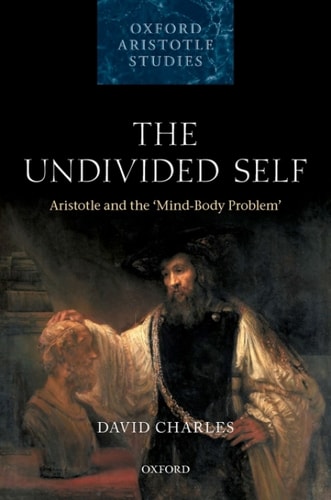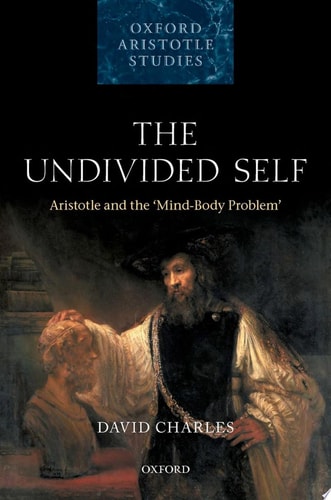
The Undivided Self: Aristotle and the Mind-Body Problem
0
0
As an Amazon Associate and affiliate partner, Menrva Books earns from qualifying purchases. Learn more
Author Description
Aristotle initiated the systematic investigation of perception, the emotions, memory, desire and action, developing his own account of these phenomena and their interconnection. The aim of this book is to gain a philosophical understanding of his views and to examine how far they withstand critical scrutiny. Aristotle's account, it is argued, constitutes a philosophically live alternative to conventional post-Cartesian thinking about psychological phenomena and their place in a material world. It offers a way to dissolve, rather than solve, the mind-body problem we have inherited.
Menrva's Summary
THE THESIS
Does Aristotle provide a viable framework for resolving the contemporary mind-body problem by rejecting post-Cartesian dualism? Professor David Charles examines Aristotle's foundational inquiries into perception, emotion, memory, and desire to determine their relevance to modern psychological discourse. By analyzing the interconnection of these phenomena, the author argues that Aristotelian thought offers a distinct alternative to traditional materialist or dualist perspectives. The text evaluates whether these ancient insights can effectively dissolve the conceptual tensions inherent in current debates regarding the relationship between the mind and the physical world.
THE SCOPE MAP
What You Will Find
- A detailed analysis of Aristotelian theories on perception, memory, and desire.
- A critical comparison between Aristotelian psychology and post-Cartesian philosophical frameworks.
- An investigation into the integration of psychological phenomena within a materialist worldview.
- A philosophical methodology aimed at dissolving rather than solving the mind-body problem.
THE AUTHORITY PERSPECTIVE
Scholars and students of ancient philosophy frequently cite this work as a rigorous examination of Aristotle's psychological framework. Readers often note the academic density of the prose, which requires a strong background in both classical studies and contemporary philosophy to fully appreciate the author's arguments.
Page Count:
320
Publication Date:
2021-05-16
Publisher:
Oxford University Press
ISBN-10:
0198869568
ISBN-13:
9780198869566
Psychology
Philosophy
Metaphysics
Academic