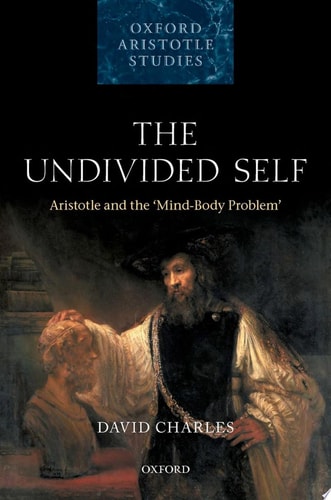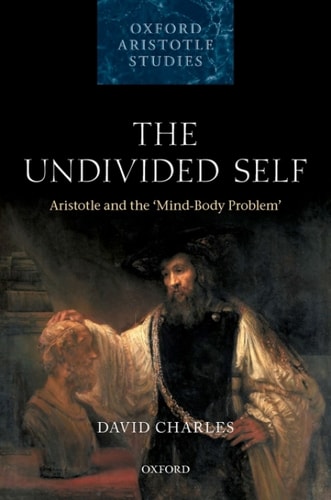
The Undivided Self: Aristotle and the Mind-Body Problem
0
0
As an Amazon Associate and affiliate partner, Menrva Books earns from qualifying purchases. Learn more
Author Description
Aristotle initiated the systematic investigation of perception, the emotions, memory, desire and action, developing his own account of these phenomena and their interconnection. The Undivided Self aims to gain a philosophical understanding of his views and to examine how far they withstand critical scrutiny. Aristotle's account, it is argued, constitutes a philosophically live alternative to conventional post-Cartesian thinking about psychological phenomena and their place in a material world. Charles offers a way to dissolve, rather than solve, the mind-body problem we have inherited.
Menrva's Summary
THE THESIS
This book investigates whether Aristotle’s integrated account of psychological phenomena offers a viable alternative to post-Cartesian dualism regarding the mind-body problem. Professor David Charles, a scholar of ancient philosophy, utilizes a rigorous analytical framework to re-examine Aristotle’s foundational texts on perception, emotion, memory, and desire. By situating these concepts within their original context, the author argues that Aristotle provides a conceptual path to dissolve the modern mind-body dichotomy rather than attempting to solve it through traditional dualist or materialist lenses.
THE SCOPE MAP
What You Will Find
- A detailed analysis of Aristotelian psychological phenomena including perception, emotion, memory, and desire.
- A comparative study between Aristotelian thought and post-Cartesian philosophical frameworks.
- An examination of the interconnection between mental states and physical actions.
Scope Limits
- The text does not provide a general history of the mind-body problem beyond the specific contrast with Cartesian thought.
- It does not offer a modern neuroscientific validation of Aristotelian claims.
THE AUTHORITY PERSPECTIVE
Scholars and students of ancient philosophy frequently cite this work as a dense, highly technical contribution to the Oxford Aristotle Studies series. Experts highlight the author's precise methodology as a standard for those seeking to apply classical philosophical frameworks to contemporary debates in the philosophy of mind.
Page Count:
320
Publication Date:
2021-01-01
Publisher:
OUP Oxford
ISBN-10:
0192640887
ISBN-13:
9780192640888
Philosophy
History & Surveys
Metaphysics
Philosophy of