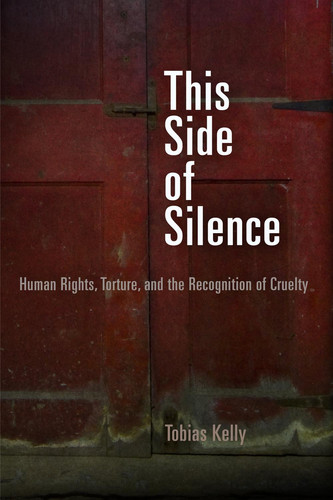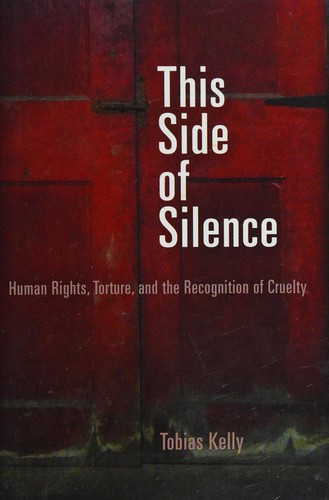
This Side of Silence
0
0
As an Amazon Associate and affiliate partner, Menrva Books earns from qualifying purchases. Learn more
Author Description
We are accustomed to thinking of torture as the needless infliction of cruelty by public officials, and we assume that lawyers and clinicians are best placed to speak about its causes and effects. However, it has not always been so. The category of torture is a very specific way of thinking about violence, and our current understandings of the term are rooted in recent twentieth-century history. In This Side of Silence, social anthropologist Tobias Kelly argues that the tensions between post-Cold War armed conflict, human rights activism, medical notions of suffering, and concerns over immigration have produced a distinctively new way of thinking about torture, which is saturated with notions of law and trauma. This Side of Silence asks what forms of suffering and cruelty can be acknowledged when looking at the world through the narrow legal category of torture. The book focuses on the recent history of Britain but draws wider comparative conclusions, tracing attempts to recognize survivors and perpetrators across the fields of asylum, criminal law, international human rights, and military justice. In this thorough and eloquent ethnography, Kelly avoids treating the legal prohibition of torture as the inevitable product of progress and yet does not seek to dismiss the real differences it has made in concrete political struggles. Based on extensive archival research and ethnographic fieldwork, the book argues that the problem of recognition rests not in the inability of the survivor to communicate but in our inability to listen and take responsibility for the injustice before us
Menrva's Summary
THE THESIS
This book investigates how the modern concept of torture emerged and the implications of its legalistic definition on understanding suffering. Tobias Kelly, a social anthropologist, argues that post-Cold War conflicts, human rights advocacy, and evolving medical and immigration concerns have shaped a new, legally-defined understanding of torture. The work examines the limitations of this narrow legal category in acknowledging various forms of suffering and cruelty. Through extensive archival research and ethnographic fieldwork, primarily focusing on Britain but with broader comparative insights, the book explores how survivors and perpetrators are recognized across asylum, criminal law, international human rights, and military justice systems.
THE SCOPE MAP
- The historical development of the legal category of torture in the late 20th century.
- The influence of post-Cold War armed conflict on understandings of torture.
- The intersection of human rights activism and medical notions of suffering.
- The role of immigration concerns in shaping perceptions of torture.
- Analysis of how legal frameworks and trauma studies define and limit the recognition of suffering.
- Case studies from Britain examining recognition of survivors and perpetrators.
- Comparative conclusions drawn from asylum, criminal law, international human rights, and military justice.
THE AUTHORITY PERSPECTIVE
In 'This Side of Silence,' Tobias Kelly presents a thorough and eloquent ethnography that challenges conventional thinking about torture. The book is noted for its nuanced approach, avoiding the assumption that the legal prohibition of torture is a simple product of progress while still acknowledging its impact on political struggles. Kelly's work is grounded in extensive archival research and ethnographic fieldwork, offering a critical examination of how suffering and cruelty are acknowledged within the specific legal framework of torture. The central argument posits that the difficulty in recognizing injustice lies not in the survivor's inability to communicate, but in the listener's failure to acknowledge and take responsibility.
Page Count:
220
Publication Date:
2012-01-01
ISBN-10:
0812243730
ISBN-13:
9780812243734
Non-Fiction
History
Human rights
Social Science
Law