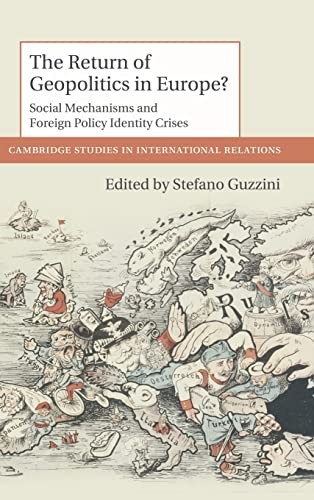
The Return of Geopolitics in Europe?
0
0
As an Amazon Associate and affiliate partner, Menrva Books earns from qualifying purchases. Learn more
Author Description
The end of the Cold War demonstrated the historical possibility of peaceful change and seemingly showed the superiority of non-realist approaches in International Relations. Yet in the post-Cold War period many European countries have experienced a resurgence of a distinctively realist tradition: geopolitics. Geopolitics is an approach which emphasises the relationship between politics and power on the one hand; and territory, location and environment on the other. This comparative study shows how the revival of geopolitics came not despite of, but because of, the end of the Cold War. Disoriented in their self-understandings and conception of external roles by the events of 1989, many European foreign policy actors used the determinism of geopolitical thought to find their place in world politics quickly. The book develops a constructivist methodology to study causal mechanisms and its comparative approach allows for a broad assessment of some of the fundamental dynamics of European security
Menrva's Summary
THE THESIS
This book investigates the resurgence of geopolitical thought in Europe following the end of the Cold War. The author, Stefano Guzzini, a noted scholar in International Relations, examines how European foreign policy actors, disoriented by the events of 1989, turned to geopolitical determinism to reorient themselves in global politics. The study employs a constructivist methodology to analyze causal mechanisms and uses a comparative approach to assess fundamental dynamics of European security, arguing that this revival of geopolitics was a direct consequence of the Cold War's conclusion.
THE SCOPE MAP
- The historical context of the end of the Cold War and its impact on International Relations theory.
- An analysis of the resurgence of realist traditions and geopolitical thought in Europe.
- A comparative study of how various European countries experienced this geopolitical revival.
- The development and application of a constructivist methodology for studying geopolitical causal mechanisms.
- An assessment of the fundamental dynamics of European security in the post-Cold War era.
THE AUTHORITY PERSPECTIVE
The book is recognized for its rigorous analysis of the post-Cold War geopolitical landscape in Europe. Scholars note its contribution to understanding the revival of realist approaches and the role of geopolitical determinism in shaping foreign policy. The comparative methodology and constructivist framework are highlighted as key strengths in dissecting European security dynamics. It is considered a significant work for those studying contemporary international relations and European security.
Page Count:
342
Publication Date:
2013-01-01
ISBN-10:
1107027349
ISBN-13:
9781107027343
Politics
History
Science
Non-Fiction
Geopolitics
International relations
Realism
Community Tags
Similar Books