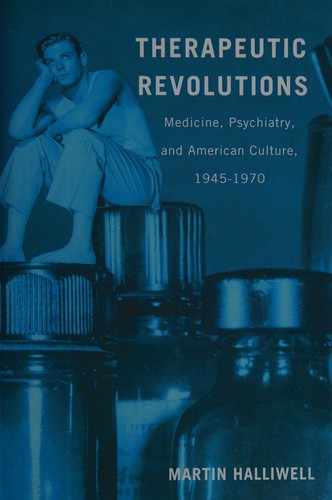
Therapeutic Revolutions
0
0
As an Amazon Associate and affiliate partner, Menrva Books earns from qualifying purchases. Learn more
Author Description
Therapeutic Revolutions examines the evolving relationship between American medicine, psychiatry, and culture from World War II to the dawn of the 1970s. In this richly layered intellectual history, Martin Halliwell ranges from national politics, public reports, and healthcare debates to the ways in which film, literature, and the mass media provided cultural channels for shaping and challenging preconceptions about health and illness. Beginning with a discussion of the profound impact of World War II and the Cold War on mental health, Halliwell moves from the influence of work, family, and growing up in the Eisenhower years to the critique of institutional practice and the search for alternative therapeutic communities during the 1960s. Blending a discussion of such influential postwar thinkers as Erich Fromm, William Menninger, Erving Goffman, Erik Erikson, and Herbert Marcuse with perceptive readings of a range of cultural text that illuminate mental health issues--among them Spellbound, Shock Corridor, Revolutionary Road, and I Never Promised You a Rose Garden--this compelling study argues that the postwar therapeutic revolutions closely interlink contrasting discourses of authority and liberation.
Menrva's Summary
THE THESIS
This book investigates the complex interplay between American medicine, psychiatry, and culture in the decades following World War II. Martin Halliwell traces the evolution of therapeutic practices and perceptions from the war's end through the 1960s, examining how national policies, public discourse, and cultural expressions like film and literature shaped understandings of health and illness. The study begins with the impact of WWII and the Cold War on mental health, progressing through the social shifts of the Eisenhower era and culminating in the critiques and alternative movements of the 1960s. Halliwell synthesizes the ideas of key postwar thinkers with analyses of cultural texts to argue that these therapeutic revolutions were driven by a tension between authority and liberation.
THE SCOPE MAP
- The impact of World War II and the Cold War on mental health discourse.
- The influence of work, family, and societal norms during the Eisenhower years on therapeutic approaches.
- Critiques of institutional psychiatric practices and the emergence of alternative therapeutic communities in the 1960s.
- Analysis of influential postwar thinkers such as Erich Fromm, William Menninger, Erving Goffman, Erik Erikson, and Herbert Marcuse.
- Perceptive readings of cultural texts including films like 'Spellbound' and 'Shock Corridor', and novels like 'Revolutionary Road' and 'I Never Promised You a Rose Garden'.
- An argument connecting postwar therapeutic revolutions to contrasting discourses of authority and liberation.
THE AUTHORITY PERSPECTIVE
This scholarly work is recognized for its richly layered intellectual history, blending national politics and healthcare debates with cultural analyses of film and literature. It is noted for its comprehensive scope, covering the period from World War II to the 1970s and engaging with influential postwar thinkers. The book's central argument posits a close link between therapeutic revolutions and the discourses of authority and liberation.
Page Count:
382
Publication Date:
2013-01-01
ISBN-10:
0813560640
ISBN-13:
9780813560649
Non-Fiction
History
Cultural History
American Studies
Psychiatry
MEDICAL History
Community Tags
Similar Books