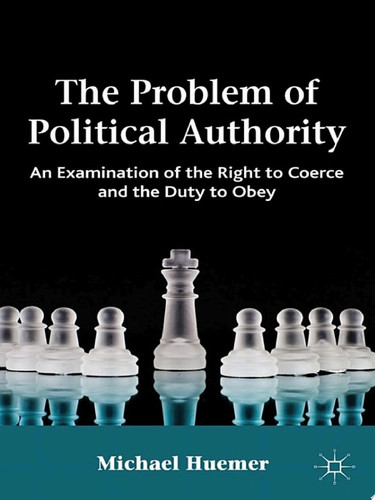
The Problem of Political Authority
0
0
As an Amazon Associate and affiliate partner, Menrva Books earns from qualifying purchases. Learn more
Author Description
Modern states commonly deploy coercion in a wide array of circumstances in which the resort to force would clearly be wrong for any private agent. What entitles the state to behave in this manner? And why should citizens obey its commands? This book examines theories of political authority, from the social contract theory, to theories of democratic authorization, to fairness- and consequence-based theories. Ultimately, no theory of authority succeeds, and thus no government has the kind of authority often ascribed to governments. The author goes on to discuss how voluntary and competitive institutions could provide the central goods for the sake of which the state is often deemed necessary, including law, protection from private criminals, and national security. An orderly and livable society thus does not require acquiescence in the illusion of political authority.--Publisher's website.
Menrva's Summary
THE THESIS
The Problem of Political Authority examines the justification for state coercion and the obligation of citizens to obey government commands.
THE SCOPE MAP
- Analysis of social contract theory, democratic authorization, and fairness/consequence-based theories of political authority.
- Argument that no existing theory successfully justifies the authority typically ascribed to governments.
- Exploration of voluntary and competitive institutions as alternatives for providing essential societal goods.
- Discussion of how law, protection from crime, and national security can be achieved without state authority.
- Critique of the 'illusion of political authority' and its necessity for an orderly society.
THE AUTHORITY PERSPECTIVE
This book is recognized for its rigorous philosophical argumentation against the legitimacy of state authority. The author systematically dismantles common justifications for political power, proposing that voluntary and competitive institutions can fulfill the functions typically assigned to the state. The work is considered a significant contribution to anarchist and libertarian thought, challenging readers to reconsider their assumptions about governance and obedience. It offers a comprehensive critique of political authority, advocating for a society structured around individual liberty and voluntary cooperation.
Page Count:
393
Publication Date:
2013-01-01
ISBN-10:
1137281650
ISBN-13:
9781137281654
Politics
Art
Philosophy
Science
Non-Fiction
Ethics
Libertarianism
Anarchism
Political Theory
Political Philosophy