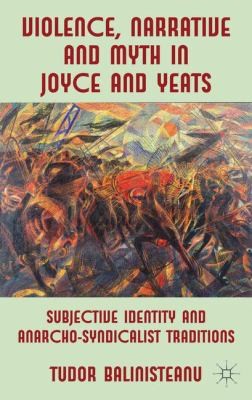
Violence, Narrative, and Myth in Joyce and Yeats: Subjective Identity and Anarchosyndicalist Traditions
0
0
As an Amazon Associate and affiliate partner, Menrva Books earns from qualifying purchases. Learn more
Author Description
Arguing that art is a form of social praxis, this book examines the capitalist ethos of serial reproduction of objects as one that also produces individuals as serial types. Art as praxis makes possible the reconstruction of one's identity and material environment as irreproducible, unique, and original art texts. Art becomes the tool of a creative process that has both material and spiritual dimensions. In recreating the self and the world as aesthetically unique, original and irreproducible, art challenges the capitalist ethos of reproduction that leads to routine, dissatisfaction and alienation. This theory is rooted in the anarchist intellectual tradition, especially Georges Sorel's conceptualisation of the relations between art, violence and social myth, in which workers are regarded as artisans, artists and activists. Balinisteanu illustrates this through analyses of the ways in which James Joyce and W.B. Yeats, along with key modernist writers and philosophers, facilitated the reconstruction of the social self and social-material reality in a process where political action also became an action of aesthetic creation.
Menrva's Summary
THE THESIS
This book investigates how art can serve as a tool for reconstructing individual and social identity against the homogenizing forces of capitalist reproduction. It argues that art, functioning as social praxis, allows for the creation of unique and irreproducible texts of the self and the material environment. This theory is grounded in anarchist thought, particularly Georges Sorel's ideas on art, violence, and myth, which view workers as artisans and activists. The author analyzes how James Joyce, W.B. Yeats, and other modernist figures utilized aesthetic creation as a form of political action to reshape social reality.
THE SCOPE MAP
- Analysis of capitalist ethos and its serial reproduction of objects and individuals.
- Exploration of art as social praxis for identity reconstruction.
- Examination of Georges Sorel's theories on art, violence, and social myth.
- Case studies of James Joyce and W.B. Yeats's modernist works.
- Discussion of how political action can be intertwined with aesthetic creation.
- Focus on the reconstruction of the social self and social-material reality.
- Exploration of the spiritual and material dimensions of art.
THE AUTHORITY PERSPECTIVE
The book posits art as a vital force for challenging capitalist alienation by enabling the creation of unique identities and environments. It draws heavily on anarchist intellectual traditions, particularly Georges Sorel's concepts linking art, violence, and myth, to frame workers as artisans and activists. Through detailed analyses of James Joyce, W.B. Yeats, and other modernists, the author demonstrates how aesthetic creation became a means of political action and social reconstruction. The work thus positions art as a critical tool for both personal and societal transformation in the face of mass reproduction.
Page Count:
242
Publication Date:
2013-01-01
ISBN-10:
0230290957
ISBN-13:
9780230290952
Non-Fiction
History
Poetry
Philosophy
Literary Criticism
Modernism
Anarchism
Art Theory
Social Theory
Community Tags
Similar Books