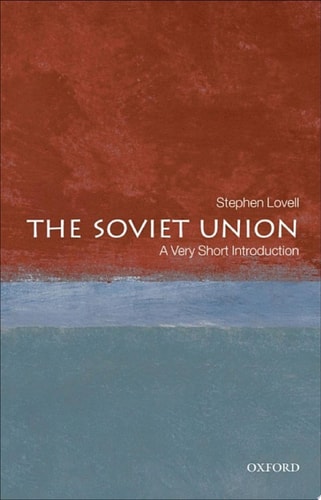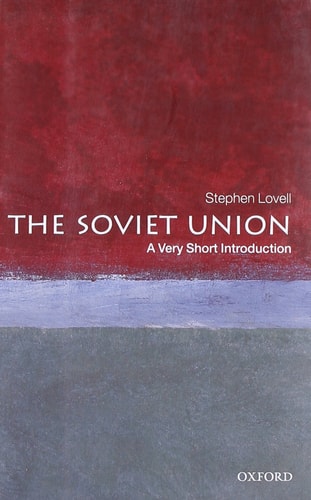
The Soviet Union: A Very Short Introduction
0
0
As an Amazon Associate and affiliate partner, Menrva Books earns from qualifying purchases. Learn more
Author Description
The Soviet Union at its height occupied one sixth of the world's land mass, encompassed fifteen republics, and stretched across eleven different time zones. More than twice the size of the United States, it was the great threat of the Cold War until it suddenly collapsed in 1991. Now, almost twenty years after the dissolution of this vast empire, what are we to make of its existence? Was it a heroic experiment, an unmitigated disaster, or a viable if flawed response to the modern world? Taking a fresh approach to the study of the Soviet Union, this Very Short Introduction blends political history with an investigation into Soviet society and culture from 1917 to 1991. Stephen Lovell examines aspects of patriotism, political violence, poverty, and ideology, and provides answers to some of the big questions about the Soviet experience. Throughout, the book takes a refreshing thematic approach to the history of the Soviet Union and it provides an up-to-date consideration of the Soviet Union's impact and what we have learnt since its end.About the Series: Combining authority with wit, accessibility, and style, Very Short Introductions offer an introduction to some of life's most interesting topics. Written by experts for the newcomer, they demonstrate the finest contemporary thinking about the central problems and issues in hundreds of key topics, from philosophy to Freud, quantum theory to Islam.
Menrva's Summary
THE THESIS
This book investigates the complex legacy of the Soviet Union, questioning whether it functioned as a failed experiment, a catastrophic disaster, or a legitimate attempt at modern governance. Stephen Lovell, a specialist in Russian and Soviet history, utilizes a thematic framework to synthesize political history with social and cultural analysis. By examining the period from 1917 to 1991, the author provides a concise evaluation of how the Soviet state functioned, how it maintained control, and why it ultimately collapsed. The text moves beyond simple chronological narration to address the ideological and structural forces that defined the Soviet experience.
THE SCOPE MAP
What You Will Find
- A thematic analysis of Soviet political history from the 1917 Revolution to the 1991 dissolution.
- Investigations into the roles of patriotism, political violence, and state-mandated ideology.
- An examination of social conditions, including poverty and the daily realities of Soviet citizens.
- A synthesis of contemporary historical perspectives on the impact and memory of the Soviet empire.
THE AUTHORITY PERSPECTIVE
Experts and readers frequently cite this work as a highly accessible entry point for those seeking a sophisticated overview of Soviet history. The text is noted for its ability to condense vast historical complexities into a readable format without sacrificing analytical rigor.
Page Count:
144
Publication Date:
2009-09-01
Publisher:
Oxford University Press
ISBN-10:
0199238480
ISBN-13:
9780199238484
History
European History
Cold War
Soviet Union