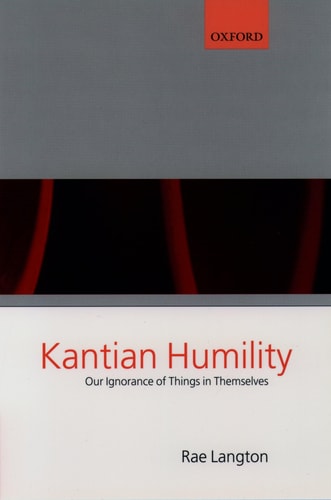
Kantian Humility: Our Ignorance of Things in Themselves
0
0
As an Amazon Associate and affiliate partner, Menrva Books earns from qualifying purchases. Learn more
Author Description
In this refreshing and exceptional work, Rae Langton offers a new interpretation and defense of Kant's doctrine of "things in themselves." Kant distinguishes things in themselves from phenomena, thus making a metaphysical distinction between intrinsic and relational properties of substances. Langton argues that his claim that we have no knowledge of things in themselves is not idealism, but epistemic humility; we have no knowledge of the intrinsic properties of substances. This interpretation vindicates Kant's scientific realism and shows his primary/secondary quality distinction to be superior even to modern day competitors. And it answers the famous charge that Kant's tale of things in themselves is one that makes itself untellable.
Menrva's Summary
THE THESIS
This work investigates whether Immanuel Kant's doctrine of things in themselves represents a form of epistemic humility rather than traditional idealism. Rae Langton, a prominent philosopher, utilizes a rigorous analysis of Kant's metaphysical distinctions to argue that his philosophy supports scientific realism. By re-evaluating the distinction between intrinsic and relational properties, Langton provides a framework that defends Kant against historical charges of incoherence and demonstrates the continued relevance of his primary and secondary quality distinctions.
THE SCOPE MAP
What You Will Find
- A detailed re-interpretation of Kantian metaphysical distinctions between phenomena and things in themselves.
- An analysis of the intrinsic versus relational properties of substances.
- A defense of Kantian scientific realism against modern philosophical competitors.
- A systematic rebuttal to the charge that Kant's theory of things in themselves is logically untellable.
THE AUTHORITY PERSPECTIVE
Experts recognize this text as a significant contribution to Kantian scholarship that successfully bridges the gap between historical interpretation and contemporary metaphysical debate. Readers frequently note the academic density of the prose, which is intended for those with a background in formal philosophy.
Page Count:
248
Publication Date:
2001-03-29
Publisher:
Clarendon Press
ISBN-10:
0199243174
ISBN-13:
9780199243174
Philosophy
Metaphysics
Epistemology
Humility
Kant
Community Tags
Similar Books