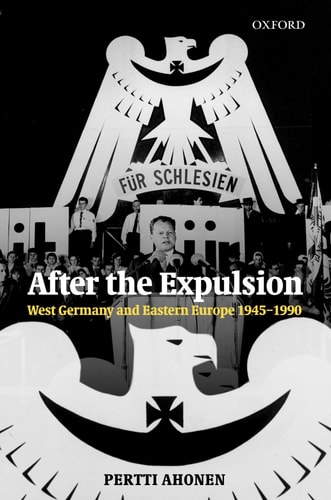
After the Expulsion: West Germany and Eastern Europe 1945-1990
0
0
As an Amazon Associate and affiliate partner, Menrva Books earns from qualifying purchases. Learn more
Author Description
This book breaks new ground by connecting two central problems faced by the Federal Republic of Germany prior to reunification in 1990, both of them rooted in the Second World War. Domestically, the country had to integrate eight million expellees forced out of their homes in Central and Eastern Europe as a result of the lost war. Externally, it had to re-establish relations with Eastern Europe, despite the burdens of the Nazi past, the expulsions, and the ongoing East-West struggle in the Cold War.
Menrva's Summary
THE THESIS
This book investigates how the Federal Republic of Germany navigated the dual challenges of domestic integration of millions of expellees and the complex re-establishment of diplomatic relations with Eastern Europe during the Cold War. Author Pertti Ahonen, a scholar of modern European history, utilizes extensive archival research to examine the intersection of post-war migration and foreign policy. He argues that the presence of these expellees acted as a significant, often overlooked, catalyst in shaping West German political identity and its diplomatic approach toward the Eastern Bloc until reunification in 1990.
THE SCOPE MAP
What You Will Find
- Analysis of the integration of eight million ethnic German expellees into West German society.
- Examination of the diplomatic tensions between the Federal Republic of Germany and Eastern European nations.
- Evaluation of the impact of the Nazi past on post-war international relations.
- Discussion of the influence of the Cold War power struggle on German domestic and foreign policy.
THE AUTHORITY PERSPECTIVE
Historians and political scientists frequently cite this work as a definitive study on the intersection of migration and diplomacy in post-war Germany. Readers often note the academic density of the prose, which provides a comprehensive and rigorous examination of a complex historical period.
Page Count:
328
Publication Date:
2004-01-01
Publisher:
Oxford University Press
ISBN-10:
0199259895
ISBN-13:
9780199259892
History
Eastern Europe
International relations
Germany history
Cold War
German history
European History
Community Tags
Similar Books